
Your SEO team monitors rankings. Your paid team tracks ad performance. PR manages publisher relationships, and brand works on how customers understand what makes you different.
So who’s responsible when ChatGPT recommends a competitor instead of you?
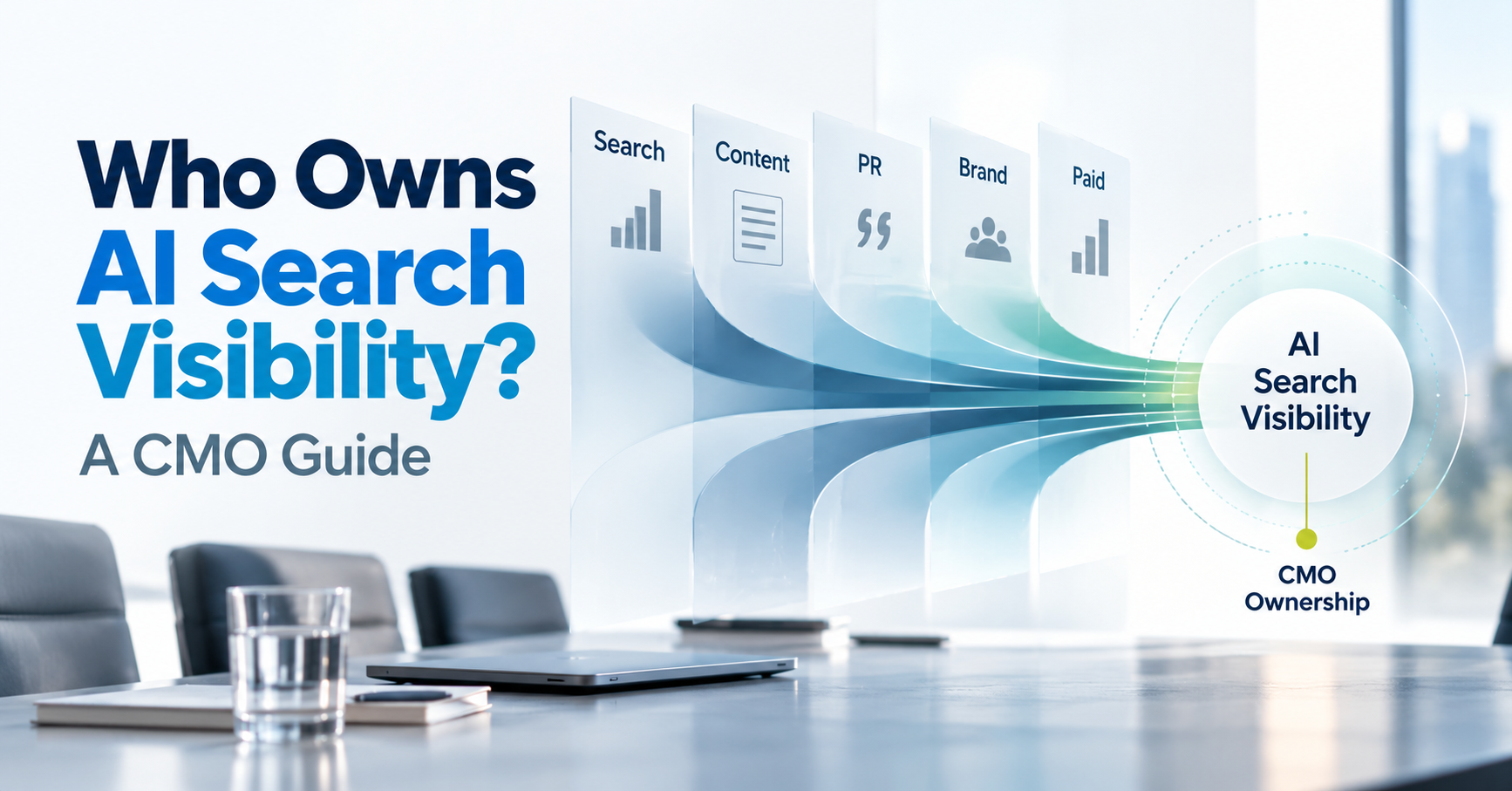
None of those teams can answer it alone, because AI answers draw on more than your website. They pull from publishers, review sites, resellers, communities, and listings, and each of those sits with a different owner.
We saw the effect in our own tracking. Between August 26 and September 24, 2026, growbydata.com was cited in 509 of the 3,028 AI answers we tracked, but GrowByData was named in only 348. The SEO view of that result and the brand view of it are two different stories, and someone has to hold both.
Here, governance means the operating rhythm a marketing organization uses to measure, assign, and review how its brand appears in AI answers and traditional search. It doesn’t mean a policy on how your team uses AI tools.
The answer usually isn’t a new team. It’s a shared view of performance, one accountable owner, and a clear path from a finding to an action.
Our Own Data: Cited In 509 AI Answers, Named In 348
The numbers above come from GrowByData Compass, GrowByData’s own account, August 26 to September 24, 2026. The dataset covers 3,028 tracked AI answers to prompts about our solution areas: ChatGPT (1,317 answers), Google AI Mode (1,317), and Google AI Overviews (333) in the US, plus Perplexity (61) in Boston, MA.
“Cited” means our domain appeared as a source. “Named” means our brand appeared in the answer text. It’s one account’s prompts, and they lean toward our own product areas, so it isn’t a benchmark.
The result does show why ownership gets murky. A page can earn the citation while the brand goes unmentioned.
Content teams can improve the first. The second usually depends on what other sources say about you, which brings in PR, brand, and partners.
Who Should Own The Outcome
One workable arrangement: the CMO, or the senior marketing leader who reports to the executive team, owns the outcome. A named program lead, often the head of search or growth, runs the measurement and convenes the review. Each channel team owns the fixes that sit in its area.
The important part is that the accountable person is named. Shared ownership tends to mean each team assumes another one is watching the gaps. The exact org chart matters less than whether one person answers the question in the leadership meeting.
What Leadership Should Measure
Start with a short scorecard. Five measures are enough, and each one should say where its data comes from, because no single system covers all of them.
| Measure | Question it answers | Where the data comes from | Suggested owner |
|---|---|---|---|
| Visibility versus named competitors | Are we showing up in AI answers, and how do we compare? | GrowByData Compass, by platform, competitor, and your chosen markets and devices | Program lead |
| Citation share and source mix | Which domains do AI platforms cite for our category? | GrowByData Compass, citation domains by prompt and platform | Program lead with PR and content |
| Sentiment and accuracy | How do the answers describe us? | GrowByData Compass, sentiment by platform and prompt | Brand marketing |
| Google AI impressions and referral traffic | Are AI surfaces showing our pages, and are visits following? | Search Console for Google AI impressions, your web analytics for referral traffic | Analytics |
| Buyer-reported discovery | Do new leads say an AI answer helped them find us? | Your CRM and lead forms | Demand generation |
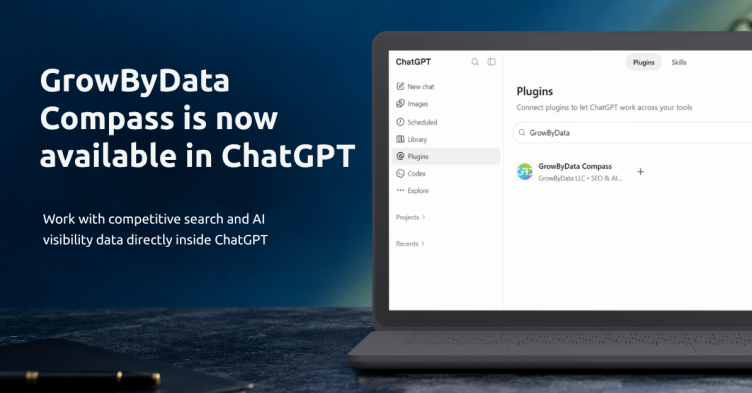
Compass covers the first three because it tracks Google results, SERP features, Google Shopping, Google AI Overviews, Google AI Mode, ChatGPT, and Perplexity. It reports on the prompts and keywords you’ve configured, so the prompt set is a decision worth documenting.
Compass doesn’t tell you what those appearances are worth in visits or revenue. That’s why the last two rows come from your own systems.
Scope every number: platform, market, device, and period. A visibility score without those labels can’t be compared from one month to the next. For the measurement mechanics, see the complete guide to AI search visibility, and for the Google results side, see Google share of voice.
What Google Now Reports
Google’s Search Console now includes a generative AI performance report covering AI Overviews and AI Mode. Google’s help page says it was rolled out to all websites worldwide as of August 31, 2026, though some sites may not see it yet if they lack enough AI impressions.
The report shows impressions only. It doesn’t show clicks, so you can see where your pages appeared in these features without seeing what happened next. Treat it as one input to the scorecard, not a replacement for referral data.
See the scorecard on your own brand. Book a demo to see how GrowByData Compass shows visibility, citations, and sentiment for your brand and competitors in your chosen markets and devices.
How Teams Investigate A Gap Before Acting
A scorecard that only reports problems creates pressure without direction. The review needs a step between “we’re behind” and “here’s the fix”: find out why. The checks below are starting points, and the answer decides who acts.
| What the scorecard shows | What to check first | Who’s usually involved |
|---|---|---|
| A competitor is named and we aren’t | Which sources the answers cite for that prompt, and what those sources say about each brand | Program lead, PR, content |
| We’re cited but not named | Whether the cited page names the brand clearly, and how other sources describe us | Content, brand |
| Answers describe products incorrectly | Where the wrong detail appears: your pages, reseller pages, or third-party listings | Ecommerce, product marketing |
| Sentiment is weaker than expected | Which cited sources carry the negative or dated language, and how current they are | Brand, customer experience |
| Strong organic rank, weak AI presence | Whether the page answers the question the prompt actually asks, and what corroborates it elsewhere | SEO, content |
In each case the first move is to pull the cited sources for a lost prompt and read them. Compass shows which domains an answer cited, so the check starts from data instead of a hunch.
The corrective action comes after, and it goes to whoever has a relationship with that source. Where visibility differs by market, the owner may differ too, since a national publisher and a local directory rarely sit with the same person.
Talking About ROI When Attribution Is Partial
Expect the question in the first review: what is this worth? The honest answer is partial, and the sources agree. Digiday has reported that CMOs are struggling to link AI visibility with sales, because no single tool ties the two together and marketers triangulate from proxy signals.
Google’s new report adds impressions, not clicks. So report a range, and label each piece:
- Direct AI referrals are the floor. Visits that arrive with an identifiable AI referrer are real, and they undercount, because a buyer who reads an answer and later types your name into a browser leaves no referrer.
- Branded search trend is the indirect signal. Read it alongside visibility changes and treat it as correlation.
- Buyer-reported discovery is the tiebreaker. Add an AI option to the “how did you hear about us” field on your lead form and in sales intake. It’s self-reported and imperfect, but it’s the buyer’s own account.
Leadership will accept a labeled range more readily than a single confident number that collapses under one question. For a deeper look at the financial case, see how leading enterprises measure ROI from AI search and LLM visibility.
How Visibility Intelligence Informs Budget Decisions
Most teams already fund SEO, paid search, PR, and content. The scorecard doesn’t need a separate budget to be useful. It changes how the existing one gets argued.
If a visibility gap traces to weak third-party coverage, that’s a PR and content conversation. If it traces to inconsistent product information, that’s an ecommerce one.
If your ads and your AI presence cover the same queries, compare the two views before moving spend: hold out a set of queries, measure over a defined period, and only then decide. Cutting paid because AI answers “should” cover the query is a guess.
Three Questions To Ask Your Team This Quarter
- Who is the single named owner of AI visibility, and do they report the number to leadership?
- When a competitor is named instead of us, can we say which sources drove it, and who is responsible for the follow-up?
- Which of our scorecard numbers come from a tool, and which come from our own systems?
If any answer takes more than a minute of discussion, that’s your starting point.
Where GrowByData Fits
The scorecard depends on data you can compare month to month. GrowByData Compass gives the program lead one view of visibility, citations, and sentiment across Google results and the AI platforms above, for your chosen markets and devices.
See LLM Intelligence for the platform view, and our AI search visibility gap analysis for the full method behind the numbers in this article.
Want to see how this scorecard would look for your brand? Request a demo or an audit and we’ll walk through visibility, citations, and sentiment against the competitors you care about.