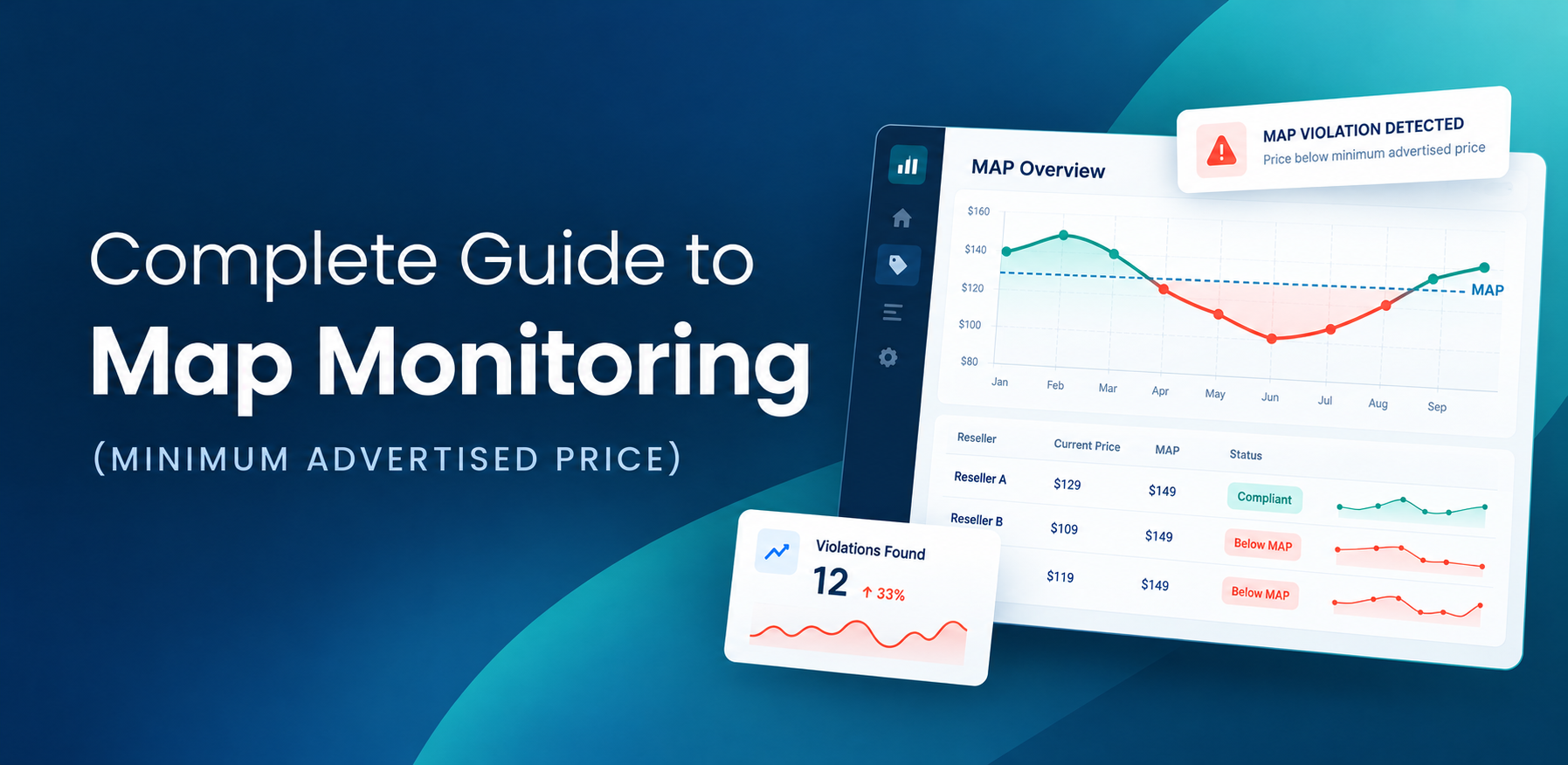
MAP monitoring is the continuous detection of minimum advertised price violations across the retail channels where your brand is sold. A complete MAP monitoring program covers SKU-level price tracking across Amazon, Walmart, Google Shopping and dealer websites, screenshot-backed evidence, classification of potential violations such as discounted list prices, coupons, bundles and cart-only pricing depending on what your MAP policy covers, automated alerts, and a workflow for enforcement.
This page explains how MAP monitoring works and organizes everything GrowByData has published on the topic, so you can go straight to the part of the problem you’re working on.
Start Here: What Are You Trying To Do?
How MAP Monitoring Works
Every MAP program runs the same loop, whether a brand does it by hand or with software. In our experience, programs most often break at step three, matching, and step five, evidence.
- Set the reference list. Load every SKU your policy covers with its MAP value, and keep it current when a new price sheet goes out.
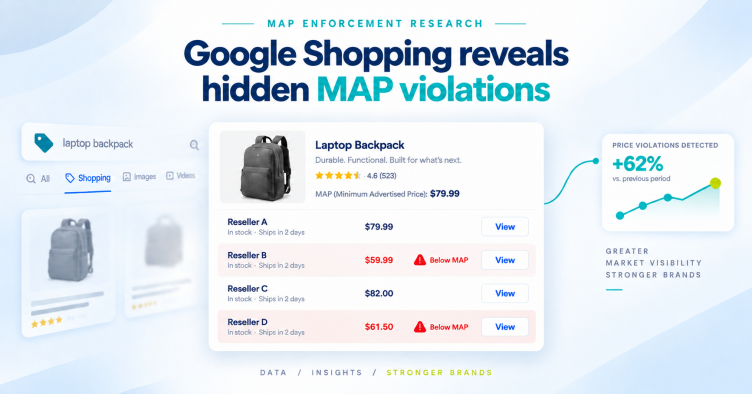
- Find every listing. Check marketplaces such as Amazon, Walmart and Google Shopping, retailer and dealer sites, and the search results that point to them. Google Shopping needs its own check. In our Google Shopping MAP study, it carried 80% of recorded violations.
- Match products at the variant level. A listing only counts if it’s the right size, color or bundle. Automated matching handles volume, while human review checks variants and bundles that automated matching can misread.
- Compare the advertised price with MAP. Classify what you find against your policy, because whether a coupon or cart-only price counts depends on how your policy defines the advertised price.
- Capture evidence. Record a timestamped screenshot, seller name, listing URL and the price as displayed. Sellers often fix the price and then dispute the notice, so a violation without evidence is just an argument.
- Identify the seller and act. Separate authorized resellers from unauthorized ones, send the appropriate notice, follow up, and track whether they comply.
Violation rates also aren’t random. A Kellogg School of Management study of MAP violations found lower violation rates among authorized retailers, on higher-priced products and at sellers with larger assortments, and higher rates where distribution is more intensive. Retailers were also more likely to violate when a policy was expected to expire soon.
For a closer look at how one reseller’s price cut spreads through repricers, see our guide to detecting MAP violations across marketplaces. To understand why a single check can mislead you, see MAP audits vs continuous monitoring.
MAP Resource Library
Our MAP guides and research are grouped by the job you’re doing. If you’re writing or revising a policy, start with the fundamentals. If violations are already showing up, go straight to the channel and enforcement sections.
MAP Fundamentals
- Minimum Advertised Price (MAP) Policy Guide: What MAP is, how it differs from MSRP, whether MAP policies are legal, and the steps to write one.
- What Is a MAP Violation?: How a MAP policy defines a violation, why it pays to track violations on every channel, and how enforcement works in the US, Canada and Mexico.
- Why MAP Enforcement Matters to Sales, Channel and Pricing Leaders: How violations erode margins and partner trust, with a global industrial brand’s turnaround.
- Complete Guide to Implementing a MAP Policy: Our downloadable guide to putting a MAP policy in place.
Monitoring And Choosing A Minimum Advertised Price Monitoring Tool
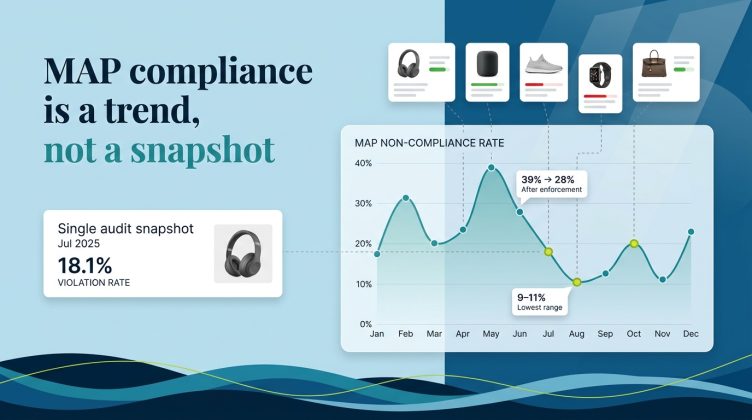
- Why MAP Compliance Needs Continuous Monitoring, Not a One-Time Audit: Six brands’ monitoring data shows how badly a single reading can mislead. One brand read 2.8% in August and 19.7% in September.
- Best MAP Monitoring Software: 10 Tools Compared: Ten platforms compared on channel coverage, evidence quality and enforcement workflow, including where each one falls short.
- Mistakes Buyers Make When Purchasing MAP Monitoring Software: The questions to ask a provider and what to check if you’re replacing a tool that isn’t working.
- 12 Things to Consider Before You Use GrowByData’s MAP Monitoring: An honest checklist of the situations where we’re not the right fit.
Policy Enforcement By Channel
- How to Track and Enforce MAP Violations on Amazon: Amazon doesn’t enforce MAP for you. Learn why cross-border enforcement is harder and how to monitor at the ASIN level across the US, Canada and Mexico.
- Stop the Walmart Price Spiral: How one low Walmart price sets off repricers and a race to the bottom, and how sales leaders use screenshot evidence to stop it.
- Google Shopping MAP Violations: 617,958 Observations: Google Shopping carried 80% of recorded violations across six brands, and it surfaced resellers that marketplace monitoring never identified under the same name.
- MAP Enforcement for Dealer and Distributor Networks: How consistent, evidence-based enforcement improves dealer behavior and cuts channel disputes.
Enforcement Operations
- How to Detect MAP Violations Across Amazon and Google Shopping: How automated repricing spreads a violation, and how to detect it at the SKU level and build evidence for enforcement.
- MAP Violation Email Template: A ready-to-edit first notice, plus how to time and tailor outreach to authorized and unauthorized sellers.
- Stop MAP Violators and Reward Sellers Who Comply: How to sort violators into tiers, message each tier differently, and recognize the resellers who follow your policy.
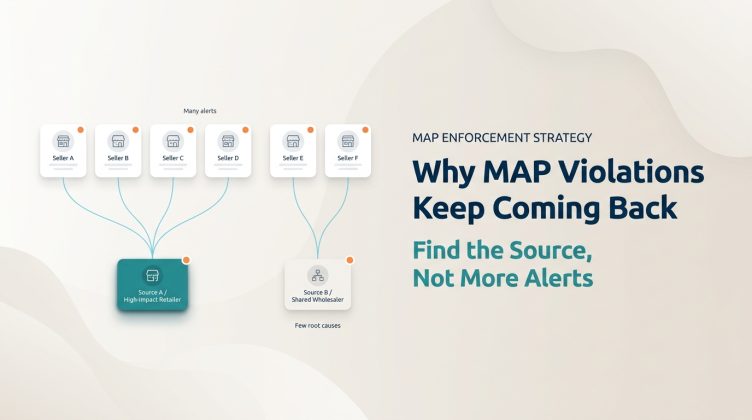
- Why MAP Violations Keep Coming Back: Why more alerts create more work, and how splitting broad discovery from focused enforcement makes violations less frequent.
- MAP Pricing During Holiday Sales: What a MAP holiday is, the problems it creates when it ends, and how to run one without damaging reseller relationships.
Customer Results of MAP Policing and Enforcement
- MAP Compliance Success Story: A Leading Retailer: How a major retailer facing widespread violations, mostly on Amazon, got its channel back under control and improved monitoring efficiency by 50%.
- MAP Monitoring Success Story: A Stationery Distributor: How the US distributor of a French stationery brand cut MAP violations by 39.5%.
Our MAP Research: 617,958 Reseller-SKU Observations Across Six Brands
Two of our MAP studies are built on monitoring data rather than opinion. The larger one covers reseller-SKU observations collected between January 2024 and August 2026 for six consumer brands in stationery, tactical gear, apparel, pet supplies, outdoor power equipment and general consumer products.
- 80% of recorded MAP violations appeared on Google Shopping.
- 86% of violations came from the top 10% of violating reseller-brand combinations.
- One stationery brand’s below-MAP rate was 19.2% on Google Shopping and 6.4% on Amazon for the same products under the same policy.
- One brand’s violation rate went from 2.8% to 19.7% between August and September, which is why a single audit can mislead.
Source: GrowByData MAP monitoring data for six consumer brands, January 2024 to August 2026 for the Google Shopping study and June 2025 to June 2026 for the continuous monitoring study.
Read the full studies: Google Shopping MAP violations and why MAP compliance needs continuous monitoring.
How GrowByData Monitors MAP Compliance
GrowByData combines monitoring software with a service team that runs the loop above for the brand. In practice, that means:
- Variant-level matching using automated matching, human matching or both, so variants and bundles are tied to the right SKU.
- Monitoring across Amazon, Walmart, Google Shopping and reseller sites in the US, Canada and Mexico.
- Authorized and unauthorized sellers tracked separately, with new violators flagged as they appear.
- Screenshots and alerts for each reported violation, plus weekly summaries of the SKUs, resellers, platforms and countries with the most violations.
- Configurable notices for authorized and unauthorized sellers, automated follow-ups of three or more, open-rate tracking on alert emails, and a MAP holiday setting that pauses monitoring and enforcement during promotions.
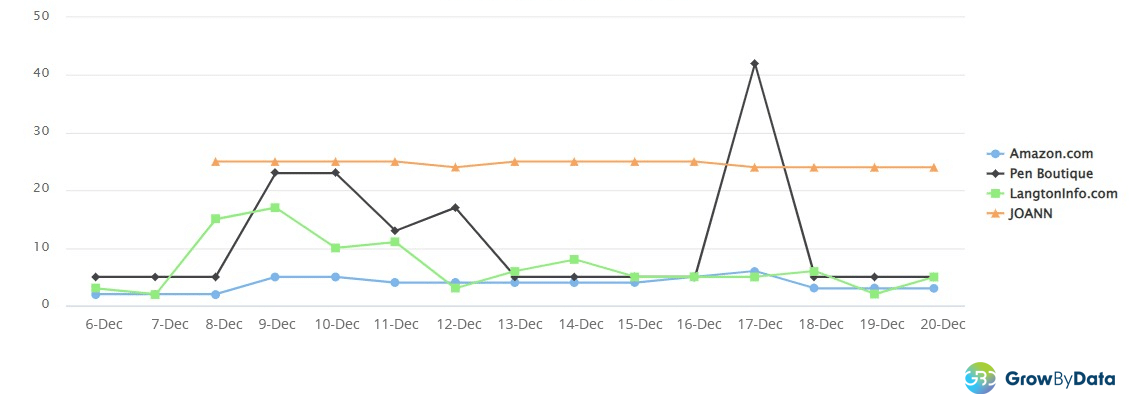
Here’s an example of the MAP report, showing violations by reseller by day.
For full product details, see GrowByData’s Minimum Advertised Price Monitoring software.
MAP Monitoring FAQ
What Is MAP Monitoring?
MAP monitoring is the ongoing check of where your products are advertised and at what price, compared with the minimum advertised price in your policy. It covers finding listings, matching them to your SKUs, flagging prices below MAP, capturing evidence and tracking the sellers responsible.
Is A Coupon Or Cart-Only Price A MAP Violation?
It depends on your policy. MAP governs the advertised price, and resellers can often sell below MAP through coupons or discounts without breaking it. Your policy has to state which displays count, such as cart-only prices or bundles. Our MAP policy guide covers how to write that definition.
How Often Should MAP Prices Be Monitored?
Match the frequency to seller risk, not the calendar. Major marketplaces, high-volume dealers and repeat offenders justify daily checks. Medium-risk retailers can be checked several times a week, and the broader web needs periodic discovery crawls to find new sellers. A predictable weekly check also lets sellers discount between scans. Why MAP violations keep coming back covers how to set this up.
What Should A MAP Violation Record Include?
Enough for someone outside your team to trust it: the product, including variation and model, the seller and storefront name, the advertised price as displayed, the MAP price for that SKU, the exact listing URL, the date and time of observation, and a screenshot of the listing at that moment.
Does Amazon Enforce MAP?
No. Amazon doesn’t enforce MAP policies. That responsibility sits with the brand or manufacturer, which is why brands monitor Amazon sellers themselves. See how to track and enforce MAP violations on Amazon.
Is A One-Time MAP Audit Enough?
It’s a useful baseline, not a program. An audit shows where you stand today and which channels need attention first, but it can’t tell you whether today is typical. In our continuous monitoring data, one brand’s violation rate went from 2.8% to 19.7% in a single month.
See Where Your Products Are Advertised Below MAP
If you want to know how your MAP coverage holds up across Amazon, Walmart, Google Shopping and reseller sites, talk to an expert to book a demo or an audit of your current MAP coverage.