
In Q1 2026, two apparel retailers told the whole story of where search visibility is going. H&M extended its lead with 26% visibility growth quarter-over-quarter. Gap lost ground across nearly every major search surface. Neither outcome was decided by keyword rankings.
That gap matters far beyond apparel. If you still measure search performance primarily through rankings, you’re tracking a shrinking slice of where buyers actually discover products. The findings below come from real-time SERP tracking in GBD Compass, which monitored apparel share of voice across leading U.S. retailers throughout Q1 2026 and the pattern applies to every retail category competing on Google today.
What Is Apparel Search Visibility in 2026?
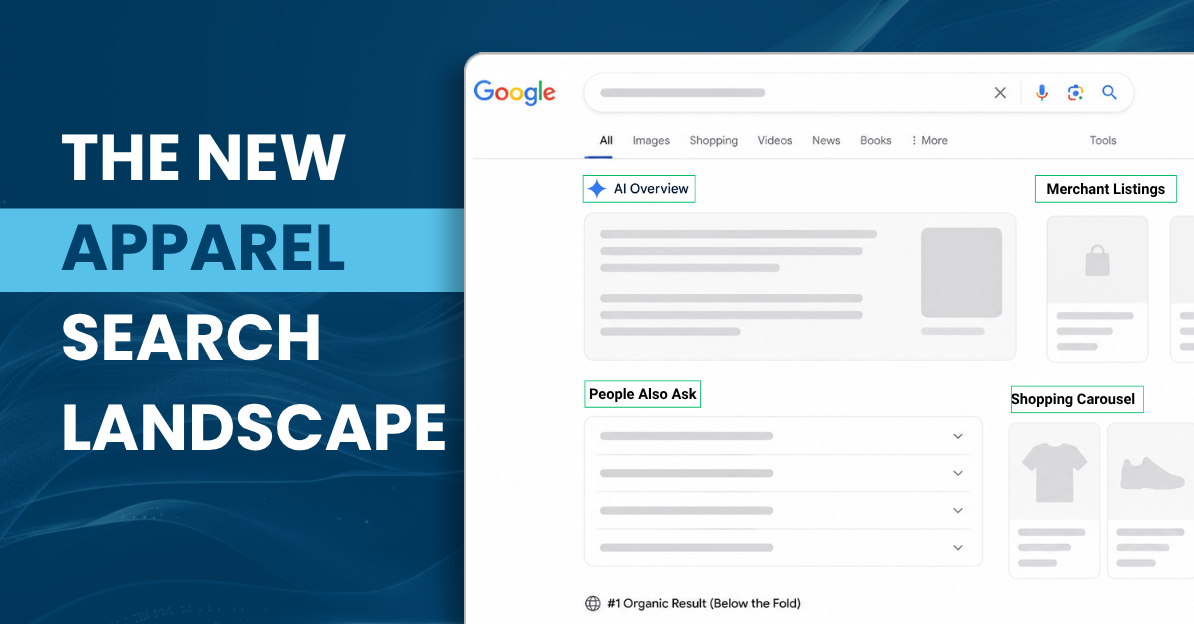
Search visibility measures how often and how prominently your products appear across the surfaces shoppers actually see merchant listings, Shopping carousels, AI Overviews, People Also Ask (PAA), and above-the-fold positions. Unlike average impression share or a single rank-tracking number, which blur performance across thousands of queries, visibility shows where you win or lose on the specific searches that drive revenue.
How H&M Won Apparel Share of Voice in Q1 2026
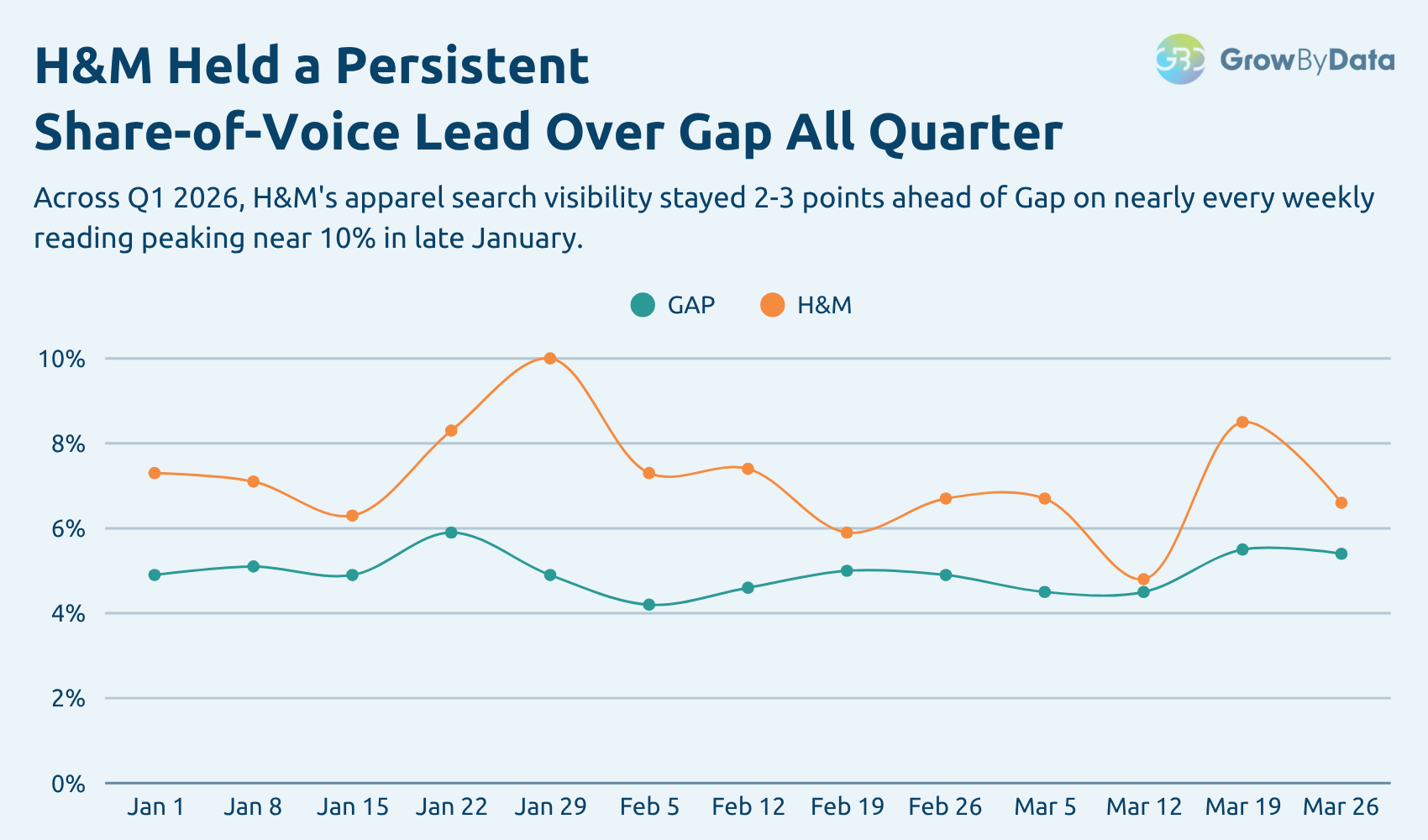
H&M finished Q1 2026 with 7.2% share of voice across tracked apparel searches, extending its lead over Gap. The driver wasn’t content or traditional blue link, it was merchant listing dominance. H&M occupied more merchant listing real estate than any other apparel retailer tracked.
Gap moved in the opposite direction, shedding visibility across nearly every major surface in the same period. The divergence reveals a clear pattern: category leadership is increasingly won in commerce surfaces, not in blue-link organic results.
Why Above-the-Fold Apparel Visibility Is Shrinking
Nine of eleven major apparel retailers appeared less frequently above the fold in Q1 2026 than the prior quarter. The cause is structural, not competitive: AI Overviews and Shopping carousels are consuming more page real estate, compressing the space left for traditional organic listings.
This reflects a broader shift in how Google structures results:
- More SERP features occupying prime screen space
- Commerce surfaces: merchant listings, Shopping carousels appearing earlier on the page
- AI-generated answers reducing clicks to traditional organic results
For retail brands, a strong keyword ranking no longer guarantees an above-the-fold presence or a click.
Merchant Listings: The Most Valuable Real Estate in Retail Search
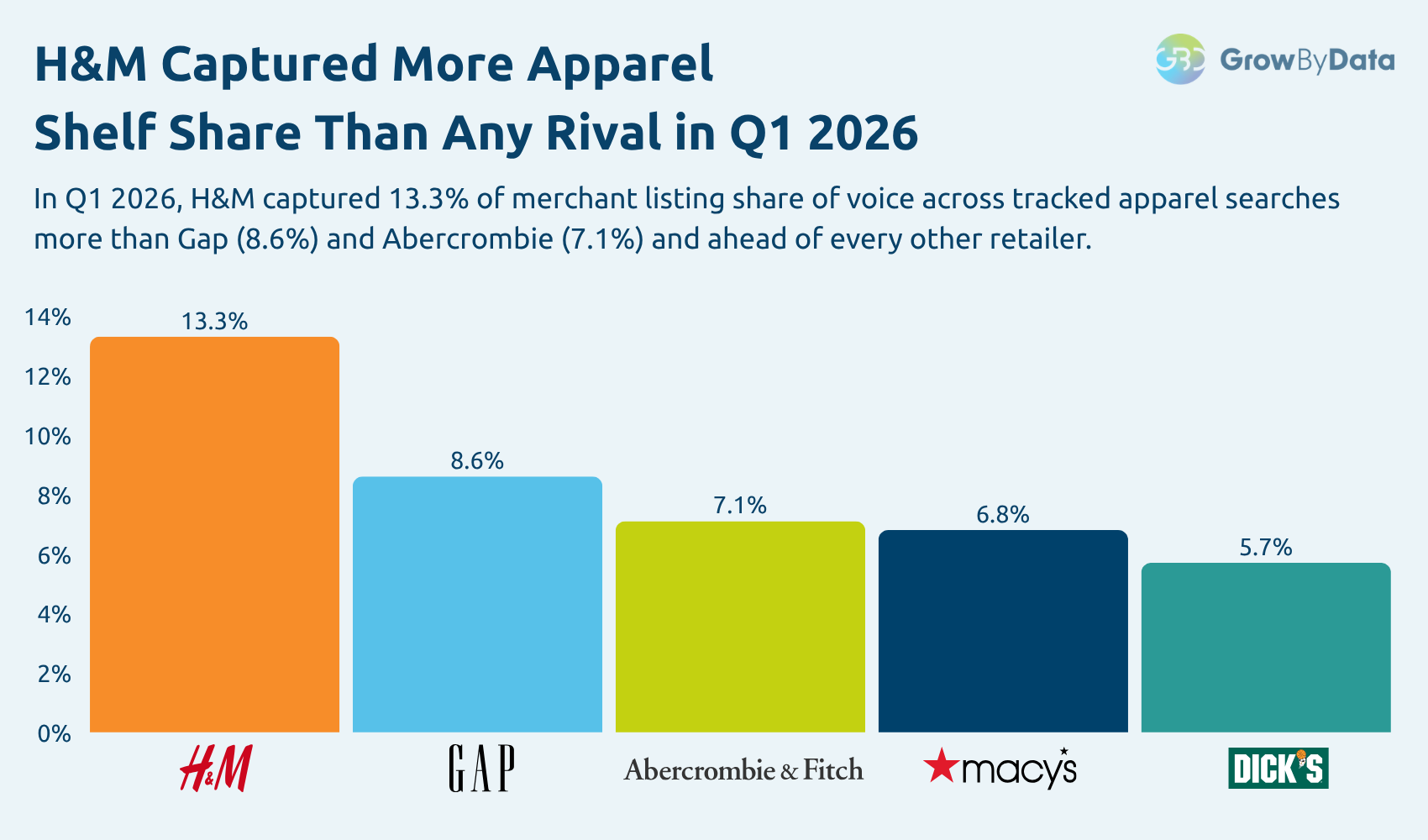
Merchant listings emerged as the single strongest driver of apparel visibility in Q1 2026. H&M, Gap, and Abercrombie collectively captured roughly 29% of merchant listing real estate across tracked searches.
What separated high-visibility brands from the rest wasn’t domain authority or content volume. It was operational quality in the product feed:
- Broader product catalog coverage across tracked search queries
- Cleaner product feed data – complete titles, attributes, and pricing
- Stronger Google Shopping health with fewer feed errors
- Higher above-the-fold Shopping placement rates
Brands that treat product feeds as a back-office function are leaving front-page visibility on the table. In 2026, Shopping feed quality is a search visibility strategy — and monitoring competitor Shopping share of voice is how you know whether you’re winning it.
See where you’re losing Search share of voice
Most brands can’t see which competitor replaced them in the carousel, on which query, or when. GrowByData’s Revenue Risk Report shows your exposure across merchant listings, Shopping carousels, and AI surfaces using the same methodology behind this analysis.
Who Appears in AI Overviews for Retail Searches?
One of the most strategically significant Q1 2026 findings: retailers were largely absent from AI Overview results for apparel queries. Editorial publishers dominated both AI Overviews and PAA visibility instead. The top-appearing domains were WhoWhatWear, Vogue, and InStyle.
The pattern suggests AI engines heavily favor editorial, informational, and review-based content when generating product recommendations not retailer product or category pages.
What this means for retail brands: PR and earned media are no longer just brand-building activities. They’re becoming a prerequisite for appearing in AI-generated search. Brands without meaningful publisher relationships may be invisible in the AI layer regardless of organic rankings or Shopping investment. Tracking your AI Overview and LLM visibility is now as important as tracking rankings
Why Smaller Retailers Are Gaining Ground in a Fragmented SERP
While established retailers lost above-the-fold visibility, several smaller players gained traction through specific surfaces:
- Children’s Place improved above-the-fold visibility quarter-over-quarter
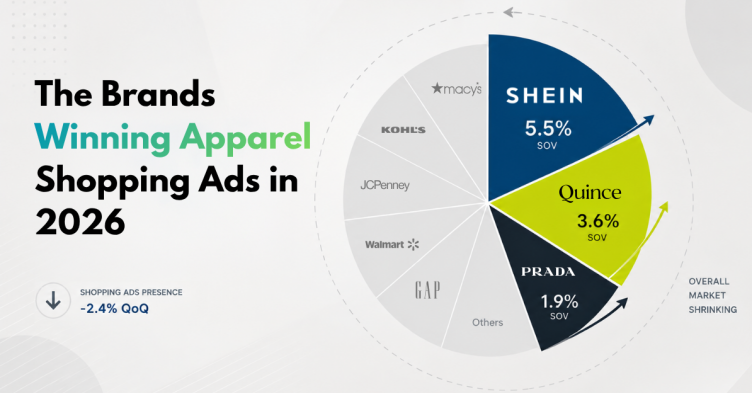
- Shein gained Shopping visibility through high-volume, low-cost product coverage
- Quince gained Shopping visibility through a distinct value-positioning strategy
As SERP layouts fragment across more surfaces, niche retailers can find openings outside traditional ranking hierarchies particularly in Shopping, where feed quality and catalog depth outweigh domain authority.
Search Visibility Is Now Distributed Across Five Surfaces
The most important takeaway from Q1 2026 isn’t which retailer ranked first. It’s that the definition of search visibility has fundamentally changed. Visibility now spans five distinct surfaces, each with its own driver and its own winners:
| Search Surface | Key Driver | Who’s Winning |
|---|---|---|
| Merchant Listings | Product feed quality | H&M, Gap, Abercrombie |
| Shopping Carousels | Feed health + bid strategy | H&M, Shein, Quince |
| AI Overviews | Editorial citations | WhoWhatWear, Vogue, InStyle |
| People Also Ask | Publisher content | Editorial domains |
| Above-the-fold | Organic Traditional SEO | Eroding for most brands |
Brands still reporting performance primarily through keyword rankings are measuring a shrinking slice of the visibility landscape. The brands gaining ground in 2026 build for the full ecosystem — clean product data for commerce surfaces, editorial presence for AI discoverability, and a measurement framework that captures all of it.
Find out what you can’t see
The GrowByData Revenue Risk Report applies the same real-time SERP tracking behind this analysis to your brand measuring your visibility across all five surfaces (merchant listings, Shopping carousels, AI Overviews, PAA, and organic) and quantifying the revenue you’re exposed to losing