
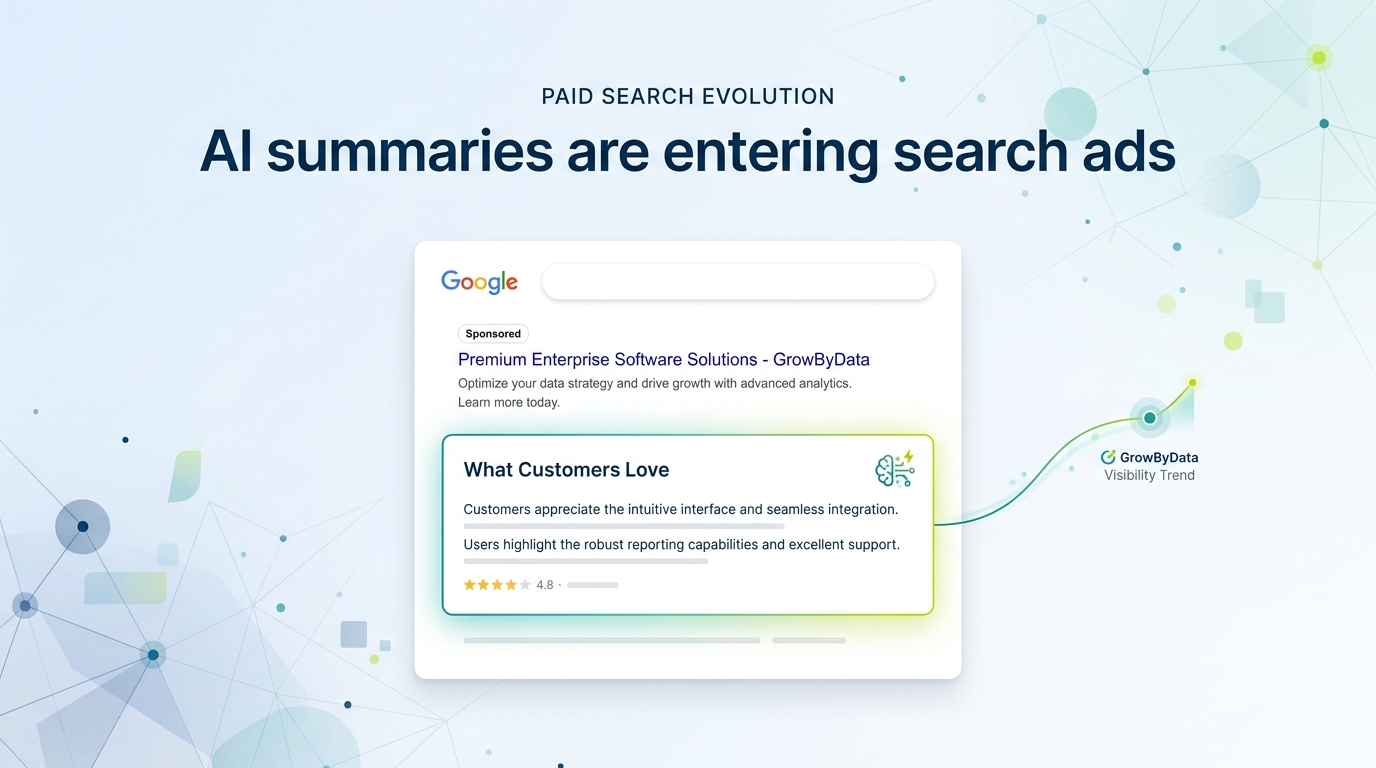
Google is testing a new AI-generated block inside some sponsored Search results, labeled “What customers love.” The feature uses customer feedback signals to generate summaries that appear alongside paid search ads, adding another layer of content within the search results page.
GrowByData tracked mobile text ad listings containing AI-generated summaries as part of its ongoing work tracking Google SERP features, to understand how this element appears, how frequently it occurs, and how visibility varies across industries.
Evidence status
| What we know | Status |
|---|---|
| Google is testing a block labeled “What customers love” inside some sponsored Search results. | Confirmed |
| The feature displays AI-generated summaries based on customer feedback signals. | Confirmed |
| GrowByData detected 8,777 mobile text ad listings containing AI-generated summaries during the monitored period. | Observed by GrowByData |
| Google has not documented eligibility criteria, refresh frequency, advertiser controls, or dedicated reporting for this feature. | Not publicly documented |
What the Block Actually Looks Like
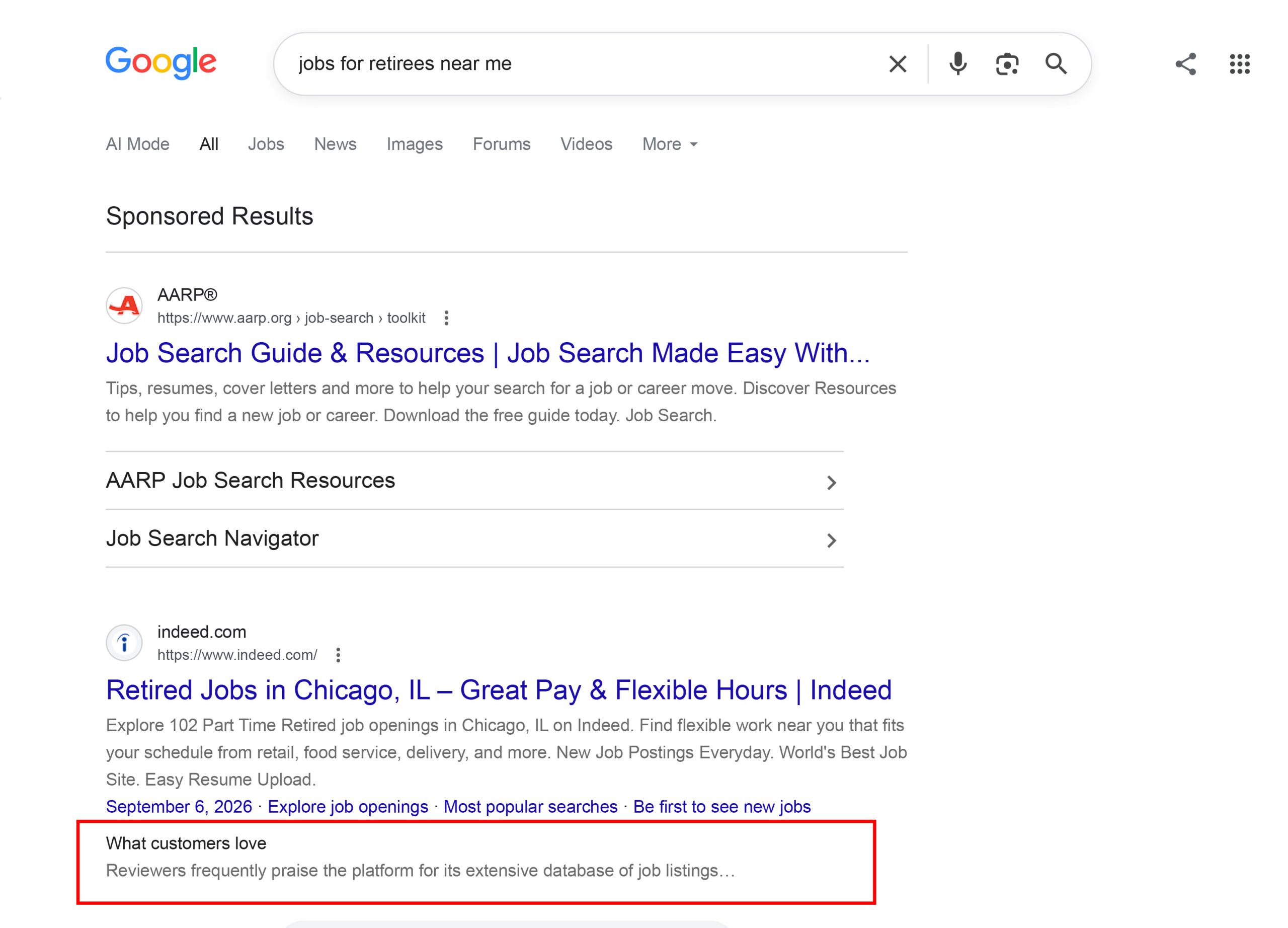
The AI-generated summary appears below the advertiser’s headline and description. Instead of only showing traditional review signals, searchers see a generated summary highlighting themes from customer feedback.
Unlike traditional ad copy, this additional content is generated by Google rather than written directly by the advertiser. That makes it another part of the paid search experience brands may need to monitor alongside their own messaging.
GrowByData Detected 8,777 AI Summary Appearances in Mobile Search Ads
GrowByData analyzed more than 1M+ mobile text ad listings and detected 8,777 AI-generated summary appearances during the monitoring period.
| Metric | GrowByData observation |
|---|---|
| Device analyzed | Mobile |
| Mobile text ad listings analyzed | 1M+ |
| Text ad listings with AI summaries | 8,777 |
AI Summary Appeared Above 1% of Total Text Ads on Multiple Days in September
The raw number of detected summaries provides useful scale, but appearance rate gives better context because it measures AI summaries relative to the total number of mobile text ad listings monitored on each day.
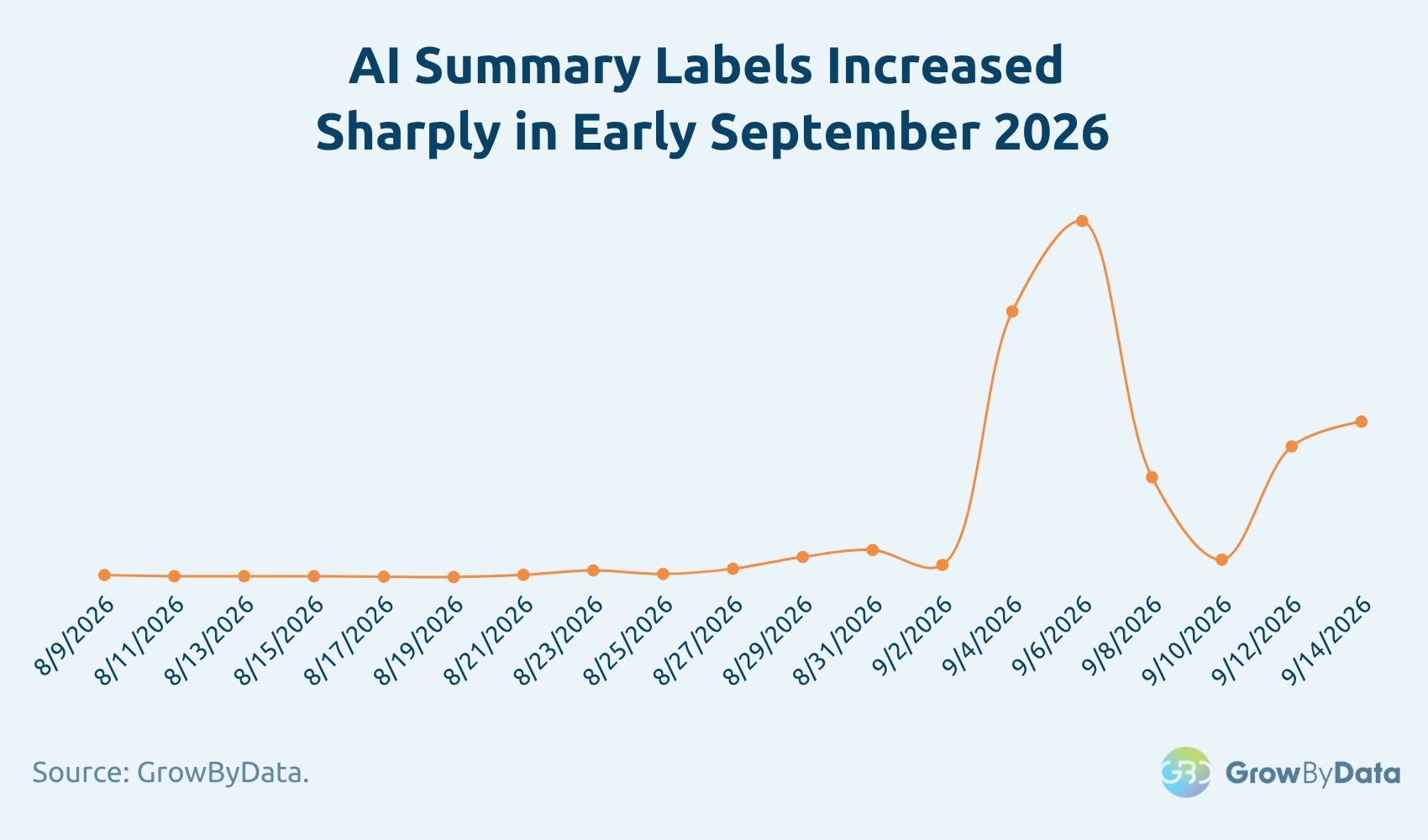
GrowByData’s data shows that the feature was relatively uncommon during the first part of August. From August 9 through August 25, the average daily appearance rate was approximately 0.09%.
From August 26 through September 15, the average daily rate increased to approximately 0.74%. The highest observed rate occurred on September 14, when AI-generated summaries appeared in 1.53% of monitored mobile text ad listings.
| Date | AI summary appearance rate |
|---|---|
| August 9 | 0.09% |
| August 30 | 0.61% |
| September 3 | 0.81% |
| September 4 | 1.10% |
| September 5 | 1.19% |
| September 6 | 1.19% |
| September 11 | 1.18% |
| September 13 | 1.32% |
| September 14 | 1.53% |
| September 15 | 0.42% |
This was not a straight-line increase. Daily appearance rates moved up and down throughout the monitoring period. But the September observations were notably higher than most of the early-August readings, with the rate exceeding 1% on several monitored days.
Insurance Had the Highest AI Summary Appearance at 1.27%
AI-generated summaries also appeared at different rates across industries in GrowByData’s monitored mobile search data.
Insurance recorded the highest observed rate at 1.27%, followed by Finance at 1.08%, Apparel at 1.06%, and Automotive at 1.01%.
These differences show where the feature appeared more frequently within the monitored dataset. They do not establish that Google is intentionally prioritizing any particular industry.
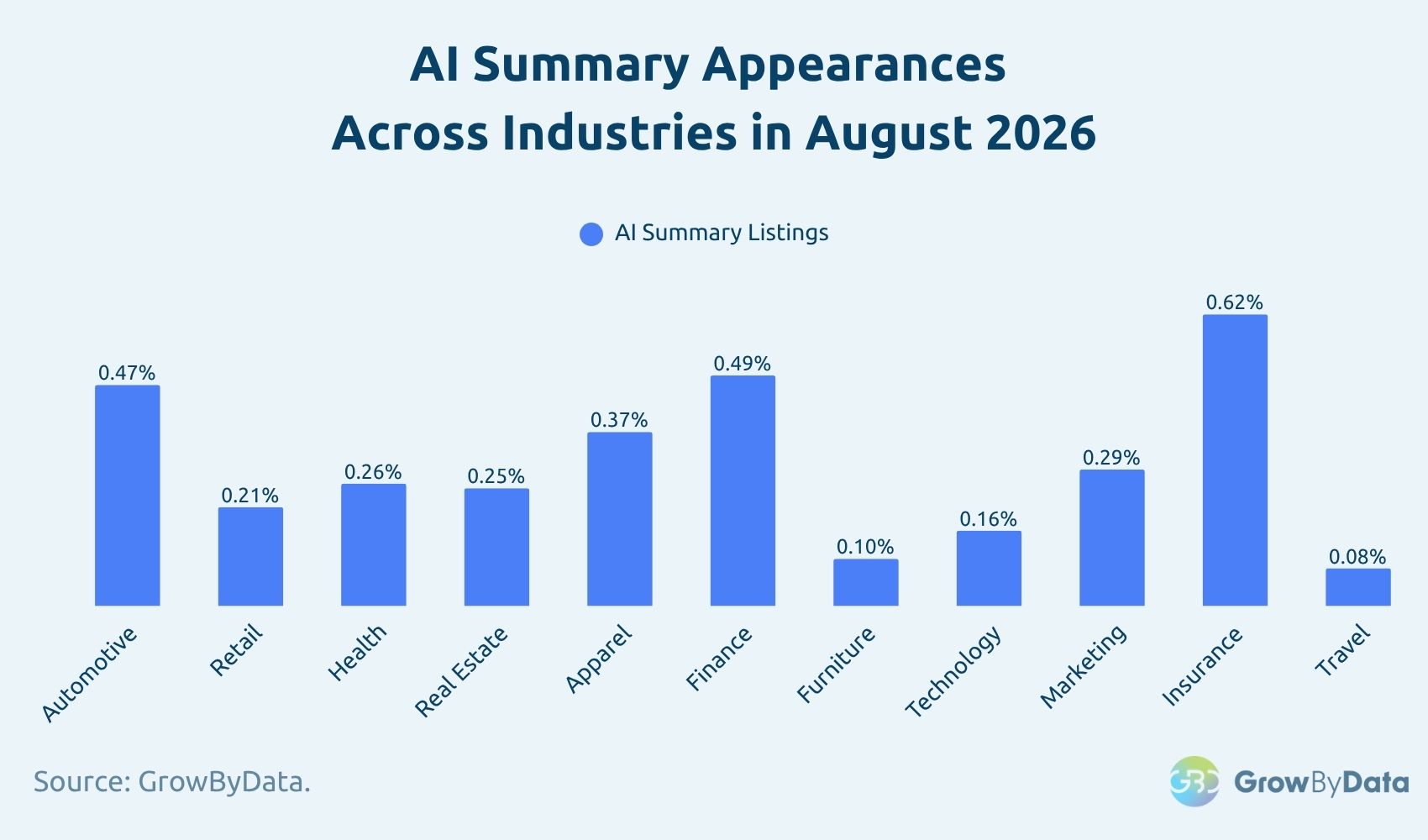
| Industry | % of Total Text Ads |
|---|---|
| Insurance | 1.27% |
| Finance | 1.08% |
| Apparel | 1.06% |
| Automotive | 1.01% |
| Retail | 0.70% |
| Marketing | 0.66% |
| Health | 0.60% |
| Real Estate | 0.51% |
| Technology | 0.39% |
| Furniture | 0.31% |
| Travel | 0.31% |
Why AI-generated ad summaries require SERP monitoring
Traditional paid search monitoring focuses on elements advertisers directly manage, such as ad copy, keywords, position, and campaign performance.
AI-generated summaries introduce another layer within the search results page. These elements are created dynamically and may vary across queries, industries, devices, and other SERP conditions, the kind of shift enterprise SERP tracking is built to catch.
GrowByData’s monitoring shows why looking at the feature only once can be misleading. The appearance rate ranged from below 0.1% on several early-August days to above 1% on multiple September days, reaching 1.53% at its highest observed point.
For advertisers managing large search programs, monitoring these changes can help answer important questions:
- Which queries trigger AI-generated summaries?
- How frequently do the summaries appear relative to total paid search listings?
- How does the appearance rate change over time?
- Which industries and categories show higher appearance rates?
- How are competitors appearing within these emerging search experiences?
GrowByData’s competitive ad intelligence helps teams monitor paid search visibility and emerging SERP changes across your chosen markets and devices.
What advertisers should monitor
- Appearance rate over time. Raw counts can change as the number of monitored ads changes, so tracking the percentage of listings containing AI summaries provides important context.
- Keyword-level triggers. Monitor which priority branded and non-branded queries surface AI-generated summaries.
- Industry differences. GrowByData’s data shows appearance rates ranging from 1.27% in Insurance to 0.31% in Furniture and Travel across the industries shown above.
- Competitor visibility. Track whether competing advertisers receive the same AI-generated treatment and how frequently it occurs.
- Device-level differences. This analysis focuses on mobile search results, so desktop behavior should be evaluated separately.
This isn’t an isolated case. AI-generated content is already showing up alongside paid placements elsewhere in the SERP, including ads in Google AI Overviews, which points to a broader pattern advertisers will need to track rather than a one-off test.
Final thoughts
Google’s “What Customers Love” experiment represents another example of AI becoming part of the paid search experience.
GrowByData’s monitoring shows that the more important signal is not simply the number of AI summaries detected, but how frequently they appear relative to the overall volume of paid search listings.
Early-August appearance rates were generally low. By September, AI-generated summaries appeared in more than 1% of monitored mobile text ads on several days, reaching a high of 1.53% on September 14.
For paid search teams, that creates a new measurement question: not only where an ad appears, but what additional AI-generated information Google is placing around it and how that changes over time.
|
Get ahead of the next SERP shift
Features like this move fast and are easy to miss without dedicated monitoring. Talk to an expert about tracking emerging SERP and ad changes across your chosen markets and devices. Talk to an expert |