
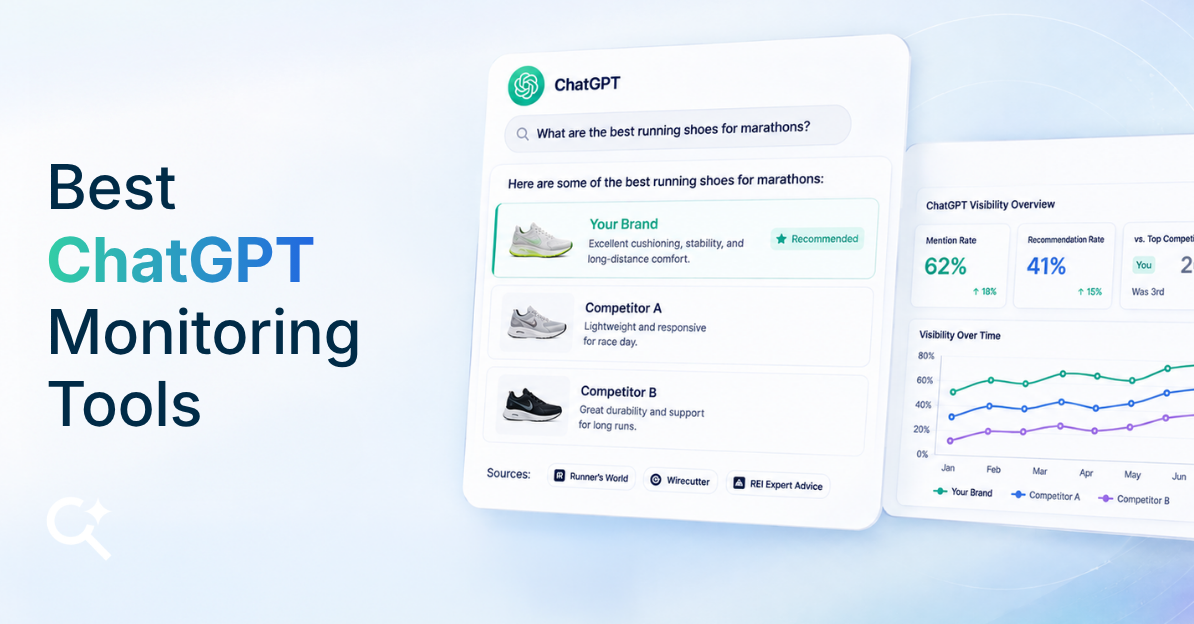
A ChatGPT monitoring tool shows how your brand appears when buyers ask AI questions about your category, your products, or the problems you solve. The useful ones go further than answering “did ChatGPT mention us.” They show how often you appear, which competitors show up instead, where you’re positioned in the answer, how you’re described, and which sources ChatGPT is actually citing. If you’re still defining the metric, start with what ChatGPT brand visibility is and why it matters.
GrowByData publishes this article and is one of the five vendors covered below, so treat what follows as an informed comparison rather than an independent ranking. We built it from each platform’s publicly documented capabilities and pricing pages as of August 2026, and flagged the spots where a vendor’s marketing page promises more than its pricing tiers actually deliver.
If you need coverage beyond ChatGPT, see how the best AI visibility platforms for enterprise compare on security, deployment and support.
Quick comparison
| Tool | Best fit | Main trade-off |
|---|---|---|
| GrowByData | Enterprise search and ecommerce teams tracking ChatGPT alongside Google search and Shopping | More platform than you need if AI visibility is the only channel on your radar |
| Profound | Teams building a dedicated AEO function with its own budget | Full nine-engine coverage is Enterprise tier only. Starter is ChatGPT alone. |
| Otterly | Marketing teams and agencies wanting AI monitoring running fast | Base plan covers 4 engines. Gemini, AI Mode, and Claude are paid add-ons. |
| Peec AI | Lean teams wanting fast, focused AI-search analytics | Standard plans let you track 3 engines at a time. Claude is Enterprise only. |
| Scrunch | Teams pairing visibility tracking with AI-agent site optimization | Not built specifically for cross-channel search and Shopping intelligence |
The best ChatGPT monitoring tools, compared
GrowByData
GBD Compass tracks brand and competitor visibility across ChatGPT, Perplexity, Google AI Overviews, and Google AI Mode, on the same priority keyword list already used for Google paid, organic, and Shopping tracking. That’s the part most single-purpose tools skip. A Director of SEO can pull up this quarter’s ChatGPT mentions next to last quarter’s Google share of voice without a second login. Enterprise teams rate it 4.7 out of 5 across 38 G2 reviews.
The honest limit: if ChatGPT is genuinely the only surface you’re tracking and you have no near-term plan to connect it to search data, you’re paying for breadth you’re not using yet.
Profound
Profound is one of the more established names in AI visibility, and the reporting depth shows it. Nine engines at the top tier: ChatGPT, Perplexity, Claude, Gemini, Grok, Microsoft Copilot, Meta AI, DeepSeek, and Google AI Overviews. That number belongs to the Enterprise plan, though, not the one most teams start on. Starter tracks ChatGPT only. Growth adds Perplexity and AI Overviews. Gemini, Claude, and Copilot wait for Enterprise. Confirm which plan you’re actually pricing before you assume you’re buying all nine.
And regardless of tier, Profound runs separately from your Google search data. A Paid Search Director comparing this month’s ChatGPT trend against the SERP trend is doing that math by hand, across two tabs.
Otterly
Otterly is built for speed of setup, and it delivers on that. A brand mention alert can be live within a day. Marketing copy advertises up to six engines, but the base plan covers four: ChatGPT, Google AI Overviews, Perplexity, and Microsoft Copilot. Gemini, Google AI Mode, and Claude are each separate paid add-ons, and one independent review called this out directly as an “add-on engine tax” worth knowing about before you sign.
What Otterly doesn’t give you, even on the higher tiers, is structured enterprise reporting a VP of Ecommerce Marketing could walk into a quarterly review and defend a budget line with. It’s built to alert you fast, not to hand you a boardroom-ready report.
Peec AI
Peec AI takes a narrower, faster approach. Standard plans let you track three engines at a time out of a pool of roughly six or seven, so you’re choosing where to point it rather than seeing everything at once. That’s fine for a small team that already knows which three engines their buyers actually use, and the product reads clean because of it. Claude is the catch. It sits behind the Enterprise tier on a separate API integration, and teams who went looking for a tool specifically to watch Claude are often surprised to learn that. Want a fourth engine later? You’re paying for it, not flipping a switch.
Scrunch
Scrunch positions itself around AI visibility monitoring plus something most competitors don’t offer: technical optimization for how AI crawlers and agents read your site, through what it calls its Agent Experience Platform. That combination is worth a look if agent-friendly content structure is already on your roadmap. It’s not built specifically for ecommerce brands trying to read search and AI visibility side by side. That’s a different job than the one GrowByData was built for.
Book a strategy session and we’ll run a live ChatGPT visibility check against your top three competitors before you commit to any of these.
What should an enterprise ChatGPT monitoring tool actually measure?
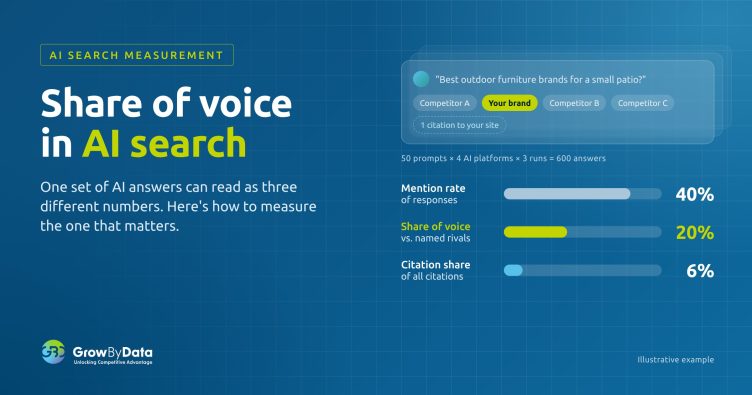
Platform count is the easiest thing to compare and probably the least important one. A better list: can you control which prompts get tracked, does it benchmark named competitors on those same prompts, does it separate a brand mention from an actual source citation, does it measure sentiment and position rather than visibility alone, and does the resulting data connect to the rest of your search measurement or live in its own silo.
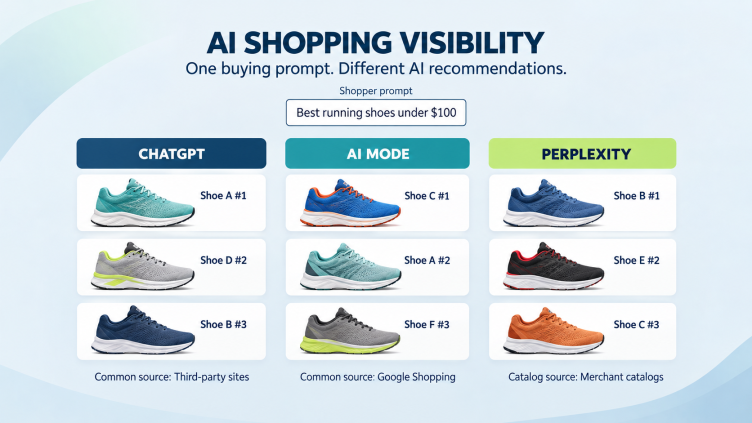
That last point matters more every quarter. A competitor can gain ground in ChatGPT’s answers while losing organic rankings on Google. Another can dominate Shopping while barely showing up in AI recommendations. A generic “AI visibility score” flattens both stories into one number and hides which one you’re actually dealing with. Our AI search visibility guide walks through how to build a keyword and prompt set that avoids that trap. For retailers, the same split happens product by product, so track product-level recommendations in ChatGPT and AI Mode as well.
Why ChatGPT monitoring is measurement, not ground truth
ChatGPT doesn’t behave like a static results page. OpenAI’s own documentation confirms that ChatGPT search may rewrite a person’s question into one or more targeted search queries, can factor in general location from an IP address, and, when Memory is turned on, may use saved context to shape that rewrite too. That means no monitoring tool, including ours, can observe every answer every real user gets.
Think of it as controlled sampling instead. You define the prompts that matter, run them consistently, and watch for patterns over time: where visibility is climbing, which competitors keep beating you, and whether those patterns shift after content or PR work. Consistency in how a tool samples matters as much as the number on the dashboard.
Which tool should you choose?
There’s no single right answer here. It depends on who’s asking, and how much budget they’ve already fought for.
A team that’s turned AI search into its own function, with its own headcount and its own line item, can justify Profound’s Enterprise price once they get there. A marketing team or agency that just needs something running by Friday will get there faster with Otterly, add-on costs and all. Peec AI makes sense when your buyers cluster in two or three specific engines and speed matters more than breadth. And if AI-agent site optimization is already sitting next to monitoring on the roadmap, Scrunch’s combination is worth a serious look.
And if the person responsible for ChatGPT visibility is the same person responsible for Google organic, paid search, Shopping, and competitive share of voice, that’s where GBD Compass is built differently. It puts those signals in one competitive picture instead of asking you to reconcile them across tools.
FAQ
What does a ChatGPT monitoring tool track?
It repeatedly runs a defined set of prompts and records how your brand shows up in the answers: whether you’re mentioned, where you’re positioned, how you’re described, which competitors appear alongside or instead of you, and which sources ChatGPT cites. Running the same prompts consistently is what separates a real trend from one lucky or unlucky answer.
Is ChatGPT monitoring the same as rank tracking?
Not really. Rank tracking records a fixed position for a keyword on a results page. ChatGPT generates a written answer instead of ten blue links, and several brands can appear in that same answer with different prominence. Metrics like mention rate, position within the answer, and citation frequency describe what’s happening better than forcing it into a ranking model built for a different kind of page.
How is ChatGPT monitoring different from social listening?
Social listening scans what people have already published, like posts and reviews. ChatGPT monitoring checks how the AI model itself represents your brand when someone asks it a question. A brand can have strong social sentiment and still lose ground in ChatGPT’s answers if competitors are better cited in the sources the model pulls from.
Should I monitor only ChatGPT?
Usually not, once AI visibility matters strategically. Different platforms can produce different competitive pictures, so it’s worth comparing ChatGPT against Perplexity and Google AI Mode too. If you’re building that wider view, our roundup of LLM visibility tracking tools covers the platform-agnostic options.
How often should the prompts get re-run?
Weekly is a reasonable floor for a brand actively watching competitive movement. Daily matters more in categories where answers shift often, like anything tied to pricing or seasonal demand. If a vendor won’t tell you their sampling frequency upfront, that’s usually a sign it’s less frequent than you’d want it to be.
See your ChatGPT visibility gap against your top competitors. No sales call required for the first look.