
Many marketing and paid search teams are noticing a growing disconnect between what Google Shopping reports show and what they experience in the market.
Dashboards are still populated. Reports are still delivered. But when teams review them, the insights often do not feel directionally right. Key competitors appear less frequently. Pricing dynamics look incomplete. Affiliate activity is harder to verify. Strategic decisions feel increasingly based on guesswork rather than evidence.
This is not a reporting problem.
It is a data collection problem.
The Role Google Shopping Ads Data Used to Play
For years, competitive Google Shopping data served as a critical input for decision-making across:
- Bid strategy and budget allocation
- Brand defense and affiliate monitoring
- Pricing and promotion analysis
- Product mix and merchandising strategy
- Regional and category expansion planning
Teams relied on this data to understand how competitors were behaving across keywords, markets, and product lines. The expectation was not perfect accuracy, but directional clarity at scale.
That expectation no longer holds.
What Changed in Competitive Data Collection
Historically, most competitive search intelligence systems relied on a similar approach: large-scale Google searches conducted in
- Incognito
- Non-logged-in mode
This model worked for a long time because incognito search results closely resembled what real users saw. Google Shopping Ads, text ads, product listings, and product placements were visible at sufficient scale to support meaningful analysis.
So What Changed Now
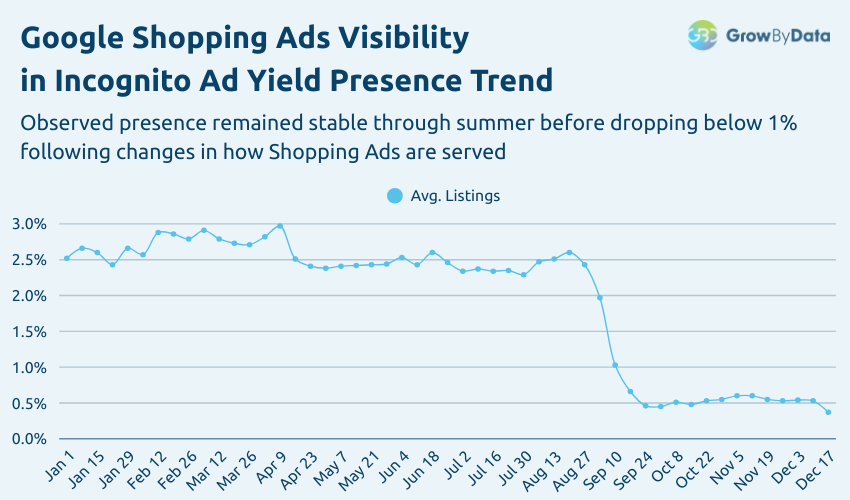
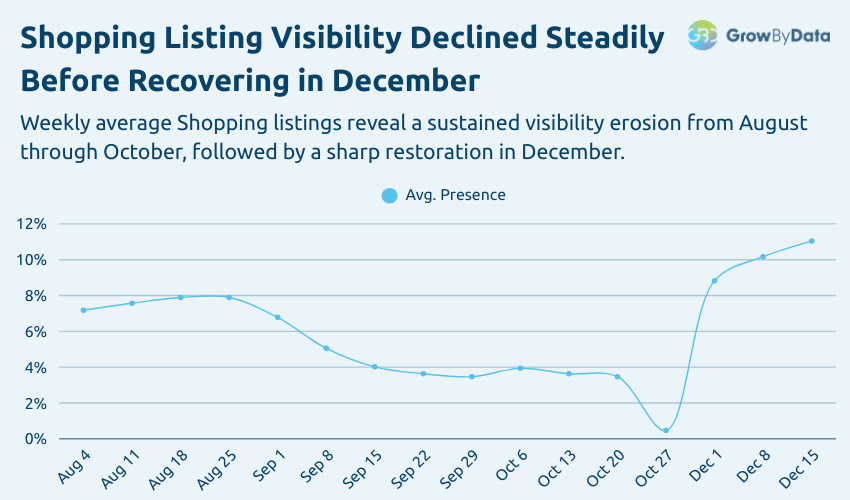
Google has steadily reduced the amount of advertising data served in incognito mode. As a result, systems relying on this method are now capturing far fewer Shopping ads than they did previously.
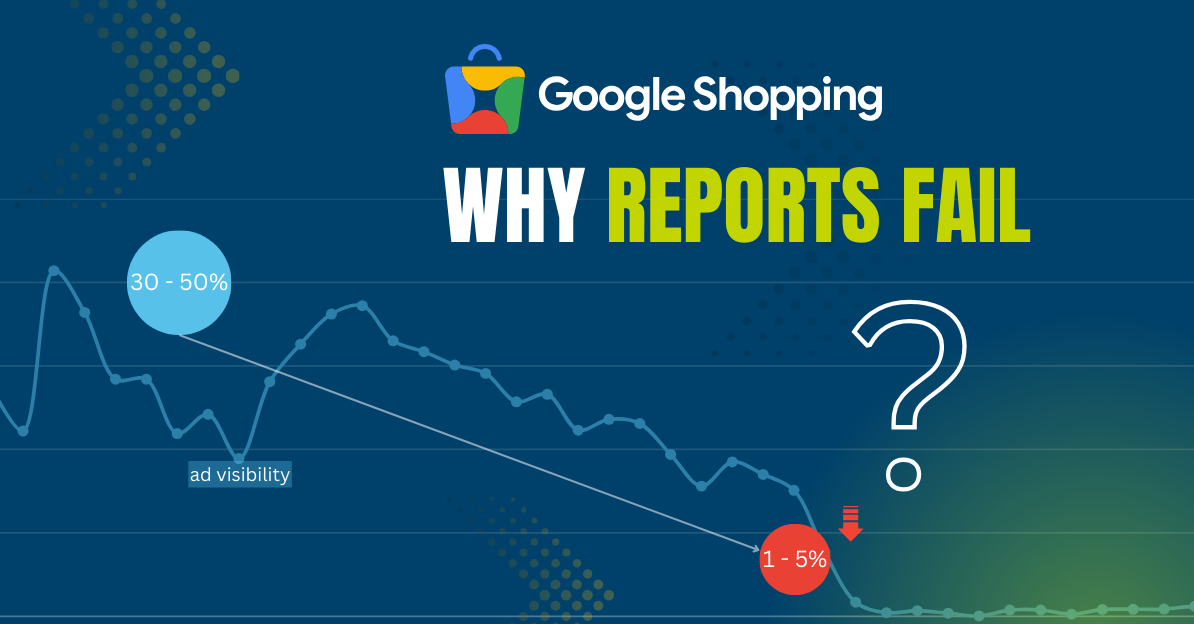
In many cases, ad visibility has dropped from 30-50% coverage to as low as 1-5% as shown in the image below.
Why Ad Yield Matters More Than Dashboards
Ad yield refers to how often ads are actually observed during data collection.
When ad yield collapses, the issue is not cosmetic. It fundamentally undermines the reliability of insights derived from that data.
Even if dashboards appear complete, the underlying sample size is dramatically smaller.
That raises important questions:
- Are you seeing all relevant competitors?
- Are pricing strategies being accurately represented?
- Are affiliate or reseller violations being captured at all?
- Can trends observed in such a small sample be trusted?
When only a small fraction of possible ads are visible, the resulting insights can easily become misleading.
The Difference Between What Humans See and What Bots See
One way to understand the problem is to compare two experiences.
When a real user searches on Google, they often see:
- Multiple Shopping ads at the top
- Text ads alongside organic results
- Rich product and pricing information
When automated systems search in incognito mode, they increasingly see:
- Few or no Shopping ads
- Limited ad placements
- A materially different search results page
GrowByData Google Shopping Monitoring was designed to reflect what shoppers see, not what bots see. As that gap has widened, the usefulness of traditional insights has declined.
The Strategic Impact of Incomplete Visibility
The loss of reliable Shopping ad data affects several areas simultaneously.
Paid search teams struggle to understand:
- Whether competitors are becoming more aggressive in key markets
- How bidding pressure is evolving across product lines
Brands lose visibility into:
- Affiliate activity on brand and brand-plus terms
- Compliance with trade promotion agreements
Retailers and manufacturers face uncertainty around:
- Competitor pricing and promotion strategies
- Product assortment changes by geography
- Whether partners are executing as expected
Without reliable competitive signals, strategy becomes reactive rather than informed.
Rebuilding Directional Intelligence
One response to this challenge has been a shift toward logged-in mode data collection.
Rather than relying on anonymous searches, this approach captures data from logged-in Google experiences, which more closely resemble what real users encounter.
When this method is applied, ad visibility often rebounds significantly, with ad yield returning to 40–70% in many categories.
This does not create perfect data.
But it restores enough signal to support strategic decisions.
Directionally Correct vs. Perfect Data
No data model offers complete accuracy. The choice leaders face is not between perfect and flawed data, but between:
- Extremely limited visibility that cannot support strategy
- Directionally reliable data that reflects real market behavior
Logged-in views can also act as a proxy for how Google presents offer to new or neutral shoppers, which is particularly relevant for customer acquisition strategies.
Warning Signs Your Google Shopping Insights May Be Off
Teams should reassess their data if:
- Competitor presence no longer aligns with internal observations
- Reports conflict with what teams see during manual searches
- Key players appear to disappear without a clear explanation
- Insights no longer pass a basic “gut check”
When internal experience and external reports diverge, it is often a signal that the inputs have changed.
Closing Thought
Google Shopping remains a powerful channel. But the assumptions that once underpinned competitive visibility no longer apply.
Leaders who continue to rely on legacy data collection models risk making decisions based on an incomplete picture of the market. Those who adapt how they collect and interpret competitive signals can regain the clarity needed to plan, defend, and grow.
The challenge is not a lack of data.
It is ensuring the data still reflects reality.
See What Your Shopping Ads Performance Isn’t Showing You
Understand how much eligible Shopping ads demand you’re missing and where visibility gaps are limiting performance.