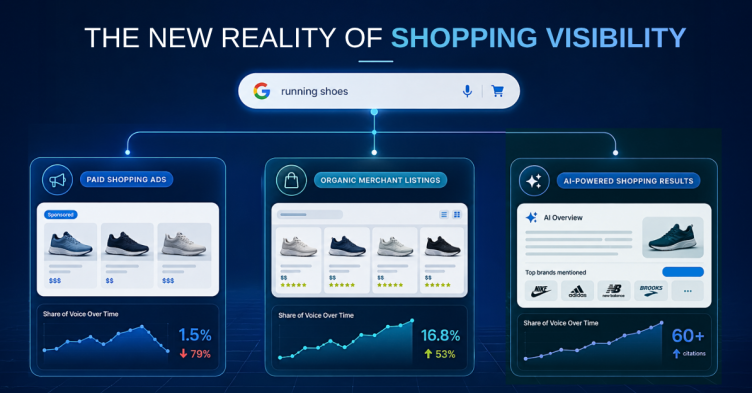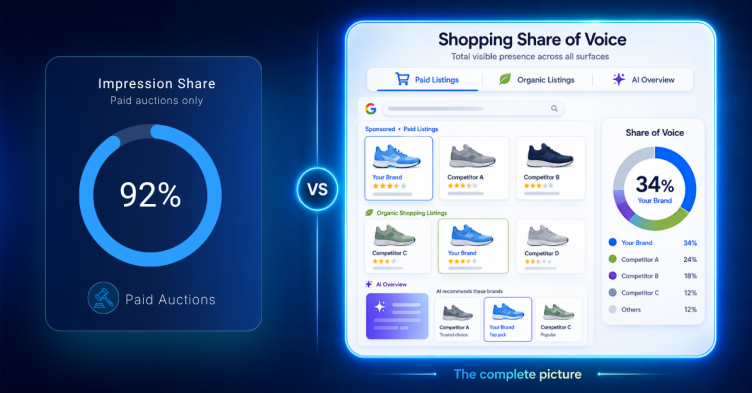


Most enterprise teams believe they are measuring Google Shopping performance accurately.
They aren’t.
Google Shopping Ads out of all SERP features in google rarely fails because of poor bidding or weak creative. It fails because visibility breaks silently and traditional performance metrics do not surface the problem until revenue is already lost.
Clicks, impressions, spend, and even ROAS report outcomes. They do not explain where demand existed but coverage failed.
At enterprise scale, that blind spot becomes expensive.
Learn How Why Advertisers Are Losing Google Shopping Ads Visibility
What Traditional Google Shopping Metrics Miss
Most organizations evaluate Google Shopping using:
- Impressions
- Clicks
- Spend
- Return on ad spend (ROAS)
These metrics describe what happened after ads appeared. They do not answer the most important operational question:
When Shopping Ads were eligible to appear, how often did they actually show?
Without that context, teams assume performance is controlled when it may simply be invisible.
→ For broader context on how competitive dynamics in Google Shopping have shifted this year, see Amazon Steps Back: The New Battle for Google Shopping Ad Dominance.
What Is Google Shopping Ad Yield?
Shopping Ad Yield measures execution, not outcome.
It represents the share of eligible Shopping demand where ads actually appeared.
In simple terms, yield reveals:
- Where demand existed
- Where ads were eligible
- Where visibility failed
This reframes Shopping from a revenue metric into a coverage discipline.
Establishing a Baseline: What the September Data Revealed
Baseline analysis exposed a visibility issue that traditional performance reports did not clearly surface.
Throughout September and into October, Shopping visibility declined steadily over time. Ads appeared in a shrinking share of eligible opportunities, leaving meaningful demand unexposed even as headline performance metrics appeared relatively stable.
During this period:
- Shopping Ads surfaced less frequently when eligible
- Coverage gaps accumulated gradually rather than triggering abrupt failures
- Standard metrics reflected fluctuation, not structural deterioration
Viewed through a yield lens, the pattern was unmistakable. The challenge was not demand variability, it was systematic under-coverage.
This baseline period established the reference point against which subsequent recovery and stabilization could be evaluated. During peak holiday periods, such as Thanksgiving, visibility often fluctuates sharply due to auction pressure and promotional activity patterns that differ meaningfully from the sustained consistency observed in December.
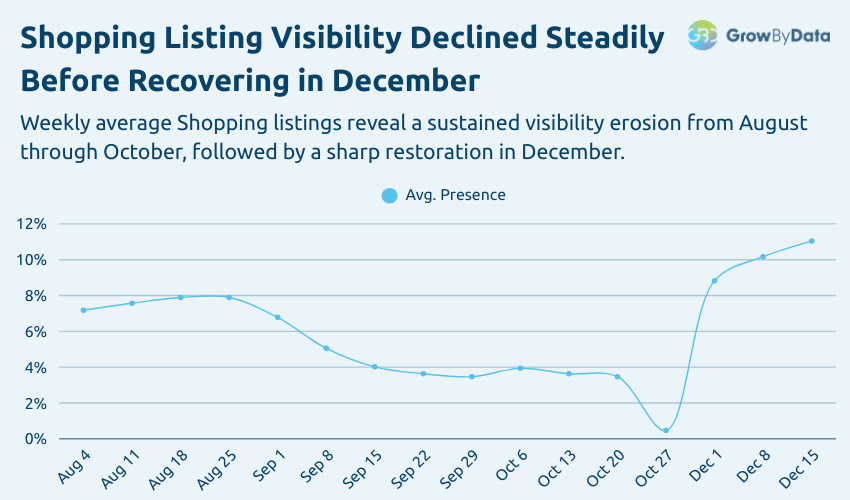
Shopping Ad Yield Trend: Baseline vs Controlled Coverage
Figure 1: Shopping Ad Yield remained low and volatile during the September baseline, then shifted to sustained, high coverage in December.
How Yield-Based Visibility Changed Performance Management
Once Shopping performance was evaluated through a yield lens, the focus shifted from outcomes to execution.
Teams could now see:
- Where coverage failed
- How long gaps persisted
- Whether recovery actually occurred
This changed how issues were identified and resolved.
Monthly Averages Confirm the Recovery Was Sustained
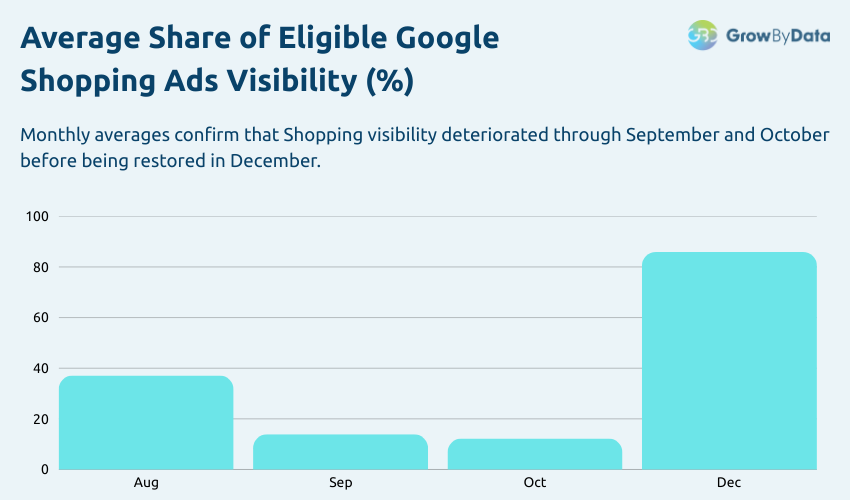
Monthly averages reinforced the trend:
- August showed moderate visibility
- September and October deteriorated sharply
- December rebounded well above prior levels
This confirmed the recovery was not a one-off spike, it was sustained.
Why This Improvement Was Not Just Seasonality
Seasonality affects search volume. It does not create consistent day-to-day visibility.
Daily data made this distinction unmistakable.
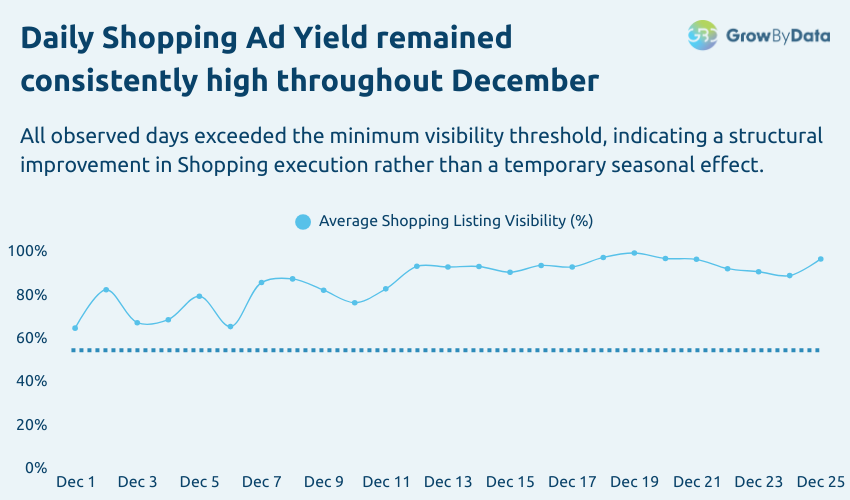
December Shopping Ad Yield Stability
Throughout December:
- Every observed day exceeded the minimum visibility threshold
- No structural breakdowns reappeared
- Coverage remained stable across the month
This level of consistency indicates structural improvement, not seasonal coincidence.
Why Google Shopping Ad Yield Matters for Enterprise SEO and Paid Search
Yield-based visibility transforms Google Shopping from a reactive channel into a controllable system.
It allows teams to:
- Detect coverage gaps before revenue impact
- Isolate underperforming markets clearly
- Distinguish execution failure from demand change
- Manage Shopping with confidence rather than assumption
Why GrowByData Enables Yield-Based Intelligence
This level of insight is possible because GrowByData is designed to measure eligible opportunity directly, rather than infer it from impressions or auction proxies.
GrowByData Google Shopping Monitoring supports:
- Opportunity-weighted Shopping measurement
- Daily and weekly yield from a single source of truth
- Market-level precision at enterprise scale
- Fixed-period comparison for credible before-and-after analysis
The result is not more data but clearer decisions.
Key Takeaway for Executives
Impressions tell you where ads appeared. Revenue tells you what you earned.
Yield tells you what you missed.
At enterprise scale, that distinction determines whether Google Shopping performance is assumed or truly managed.
See What Your Google Shopping Performance Isn’t Showing You
Understand how much eligible Shopping demand you’re missing and where visibility gaps are limiting performance.