
Pull up the results page for one of your money keywords and really look at it. Odds are it isn’t a list of blue links anymore.
There’s an AI Overview up top, a People Also Ask block, text ads, a video carousel, maybe a Reddit thread, all competing for the buyer’s attention before your organic link gets a look. Analyzing your SERP used to mean checking your rank. Now it means a harder question: who’s shaping this buyer’s decision across all of those layers, and where am I missing?
This isn’t a fringe shift. A 2025 UK study by Studio 36 Digital, analyzing a thousand keywords on Ahrefs data, found that 98.7% of Google searches now return at least one enhanced SERP feature, with the average page carrying three to four of them. The clean list of links most strategies still plan around is effectively gone.
Video SERP features is the layer teams overlook most. It shows up as a carousel, a video pack, a YouTube result, or a row of Shorts, and on research, comparison, and how-to queries it often sits in the most visible part of the page. If your buyers are watching video on those searches and your brand isn’t there, you’re losing visibility no matter how good your written content is.
Analyze the whole SERP before you look at video
Here’s the mistake most teams make. They jump straight to “do we need more videos?” Wrong question. The right one is “which SERP features are deciding visibility on the keywords that pay us, and who’s winning them?”
Video is rarely the only thing shaping the buyer. A competitor with a modest organic position can still feel everywhere if they’re also in the AI Overview, the video carousel, the ad slot, and the forum thread. That combined presence reads as credibility, even on keywords where your site still ranks.
And a growing share of those buyers never click at all. SparkToro’s 2026 research found that about 68% of US Google searches now end without a click to an outside site, up from roughly 60% in 2024. The decision is increasingly made on the results page itself. So start wide. Look at competitive share of voice across your whole keyword set first, then decide where video fits.
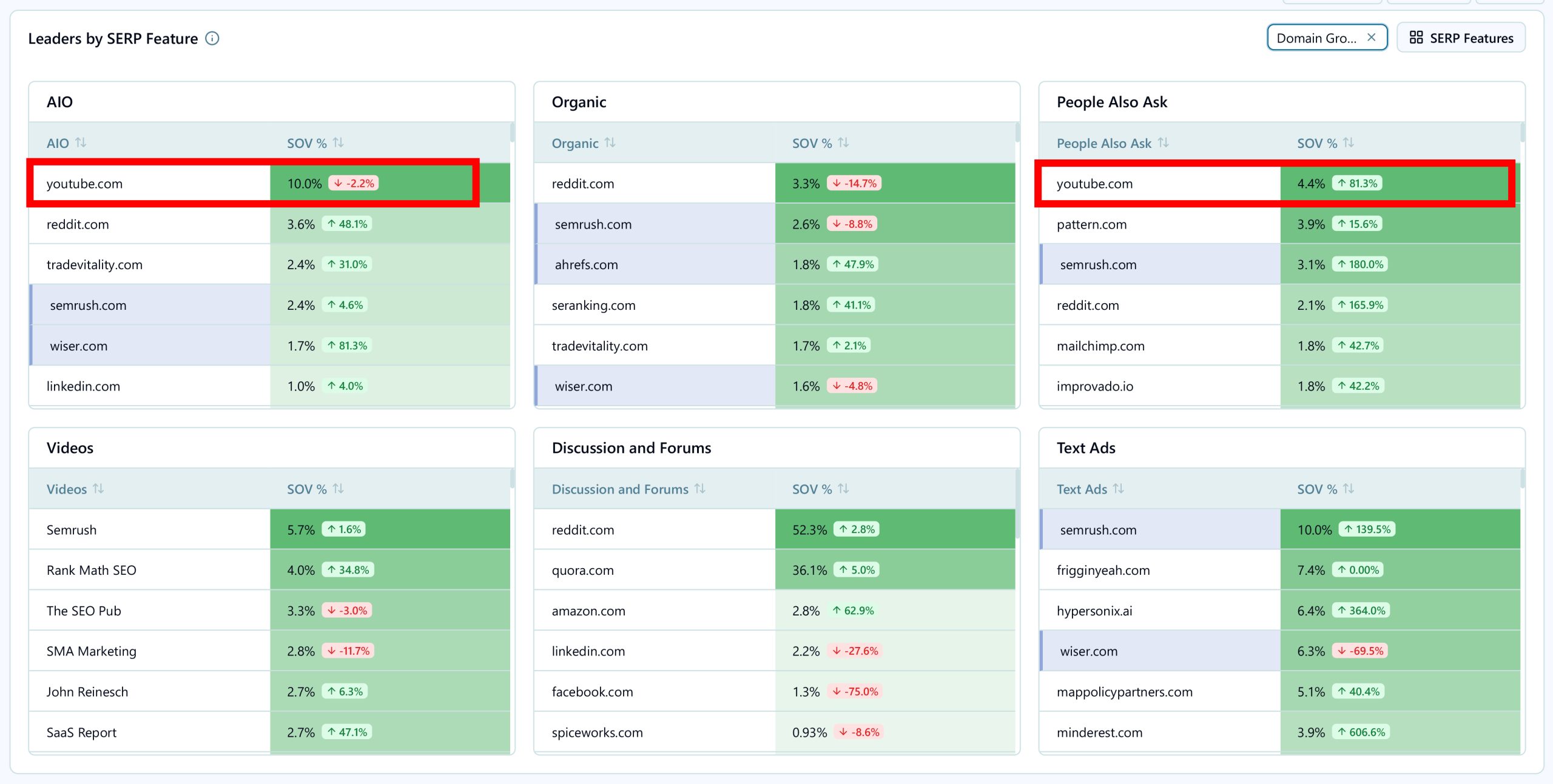
In GBD Compass, Competitive Share of Voice gives you that wide view: which domains and publishers are winning across organic, AI Overviews, What people are saying, text ads, video, and forums. You read the battlefield before you pick the fight. Competitive SERP analysis is the discipline; video is one front within it.
What counts as a real video gap
Not every keyword with a video result is an opportunity. A real one meets three conditions at once: the keyword matters to your business, Google is already showing video for it, and your brand is absent, weak, or being beaten by a competitor, publisher, or creator.
That last filter is doing the work. Plenty of video placements sit on idle informational searches that never touch pipeline. The ones worth chasing are on comparison, research, and problem-aware queries, where the buyer is close to a decision.
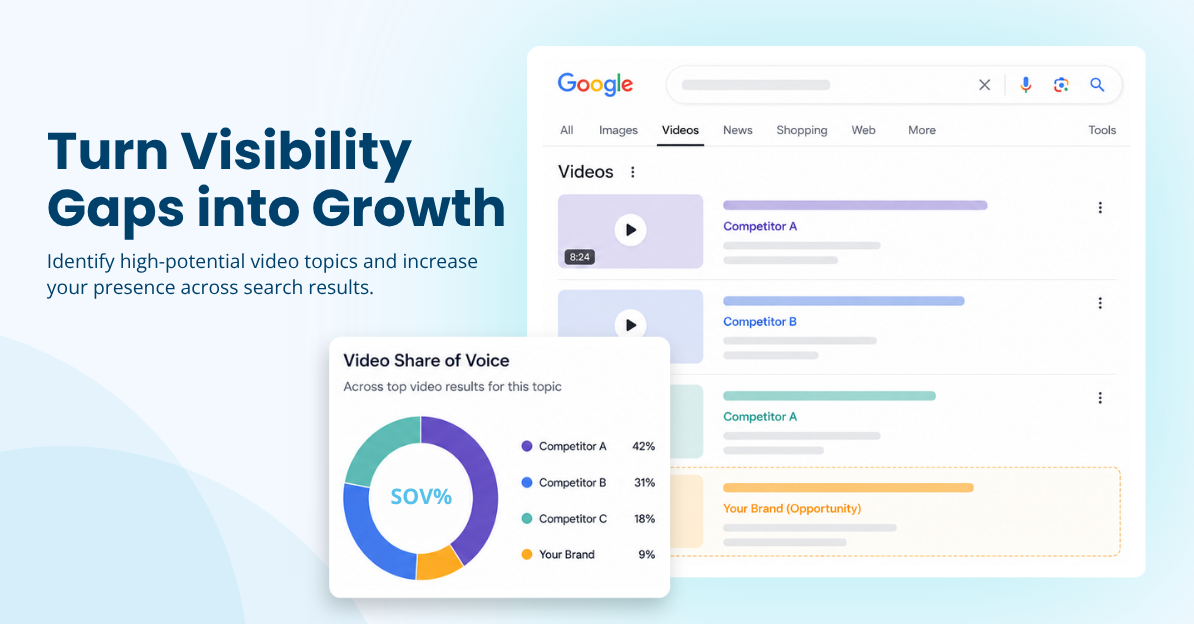
That’s also the cleanest way to define video share of voice: the slice of those video placements your brand owns, versus everyone else. A standard rank tracker won’t show it to you. It tells you your page ranks while a YouTube channel quietly owns the video row above it. That blind spot is the whole problem.
Why is the video carousel almost all YouTube?
Because Google owns YouTube and pulls the carousel straight from it. When a query triggers video, the clips are overwhelmingly YouTube uploads, with Shorts mixed in and TikTok or Instagram showing up far less often. A Perficient study of more than six thousand queries put a number on it: non-YouTube videos landed in Google’s video carousel only about a fifth of the time, with YouTube taking the rest.
That’s good news wearing a threat’s clothes. You don’t need a presence on every platform. You need the right YouTube video on the right query. And it pays twice: on these terms YouTube is also one of the most cited sources inside AI Overviews. In 2025 Google went a step further and began surfacing YouTube video carousels inside the AI Overview itself (reported by Adweek), so a single video built to win the carousel can show up in the classic video row and the AI answer at once. One asset, two of the most valuable surfaces on the page.
See who’s winning, by publisher and by domain
Once you know which keywords trigger video, find out who’s in those placements. Read it two ways.
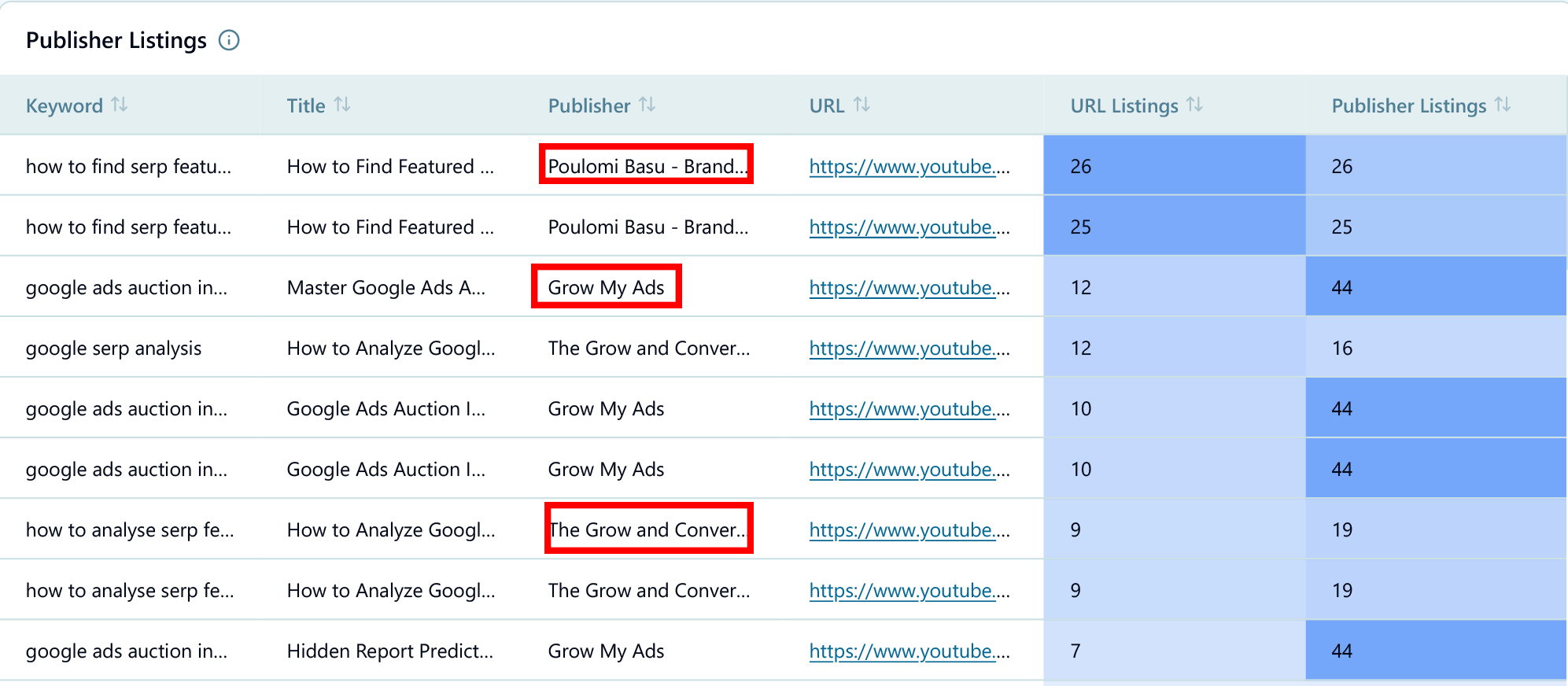
- By domain tells you the platforms in play, usually YouTube and Shorts at the top. By publisher is where the insight lives: the actual brands, creators, and media winning the row. They’re often not the rivals your team watches in paid or organic. On search and SEO keywords, for instance, the video winners are educators, software brands, and creators who shape how buyers understand the category long before a product comparison.
- Sometimes a single competitor video shows up across a whole cluster of related terms, which tells you exactly how little content it takes to own a topic if you build the right one. Local and international SERP monitoring keeps this honest by market and device, since the video picture shifts on both.
Read the titles, because that’s where the gap hides
Counting who ranks is useful. Reading what they made is where the money is. The title tells you what Google thinks satisfies the search, whether it’s rewarding tutorials, comparisons, demos, or reviews.
The pattern is remarkably consistent once you look. Take a skincare brand auditing its vitamin C serum keywords. Almost every winning video answered the same question: how to apply it. “How to use vitamin C serum.” “Vitamin C serum routine.” The application angle, on repeat. Nobody had made the video its buyers actually pause on before checkout. “Vitamin C or niacinamide.” “Is this serum worth it.”
The comparison and decision questions had no strong video answer at all.
That holds across categories. The crowded row is “how to.” The empty row is “how to choose,” and empty on a query one click from purchase is the cleanest opportunity an audit can hand you. You’re not trying to out-tutorial an established creator. You’re answering the question they never bothered to. Read this against the rest of the page too, through enterprise SERP tracking, so you catch when AI Overviews and Google Shopping are pushing you down on the same query. If you need a refresher on which features count, the SERP features overview lays them out.
Prioritize by intent, not by the size of the gap
Here’s where teams overcorrect. They find a pile of gaps and treat every one as urgent. They’re not.
A broad informational keyword can show a huge video gap and still be the wrong place to start, because the searcher is just browsing. A smaller comparison keyword is often worth more, because that searcher is deciding. The unpopular call is usually the right one: cut the biggest, most obvious gap when the intent behind it is idle, and keep the smaller one sitting a click from purchase.
Video costs time, budget, and internal alignment. Spend it where visibility moves revenue, not where the gap simply looks largest.
How do you capture a video placement once you’ve found the gap?
You make the video the incumbents didn’t, and you build it for intent, not for your brand message. If the keyword is a comparison, make the comparison. If it’s problem-aware, name the problem and solve it on screen. Answer the query better than the current result does, then point the video at the blog you already rank for so you hold the video row and the organic row at once.
The leverage is in coverage, so don’t think one video per keyword. Think one strong video per cluster. A single well-structured video built around a shared question can claim the carousel across a group of related searches, which is exactly how a few competitors dominate a category with almost no content. And the honest part teams talk themselves out of: you don’t need a studio.
On a decision query, a credible, clearly shot answer beats a glossy tutorial aimed at the wrong question. You’re competing on relevance, not budget, which is why the gap stayed open long enough to take.
Where this lives in GBD Compass
Doing this by hand means stitching exports to YouTube searches and hoping you read the titles consistently. GBD Compass collapses it into two connected views. Competitive Share of Voice shows the full battlefield, who’s winning across organic, AI Overviews, People Also Ask, text ads, video, and forums, so you size up the whole page first.
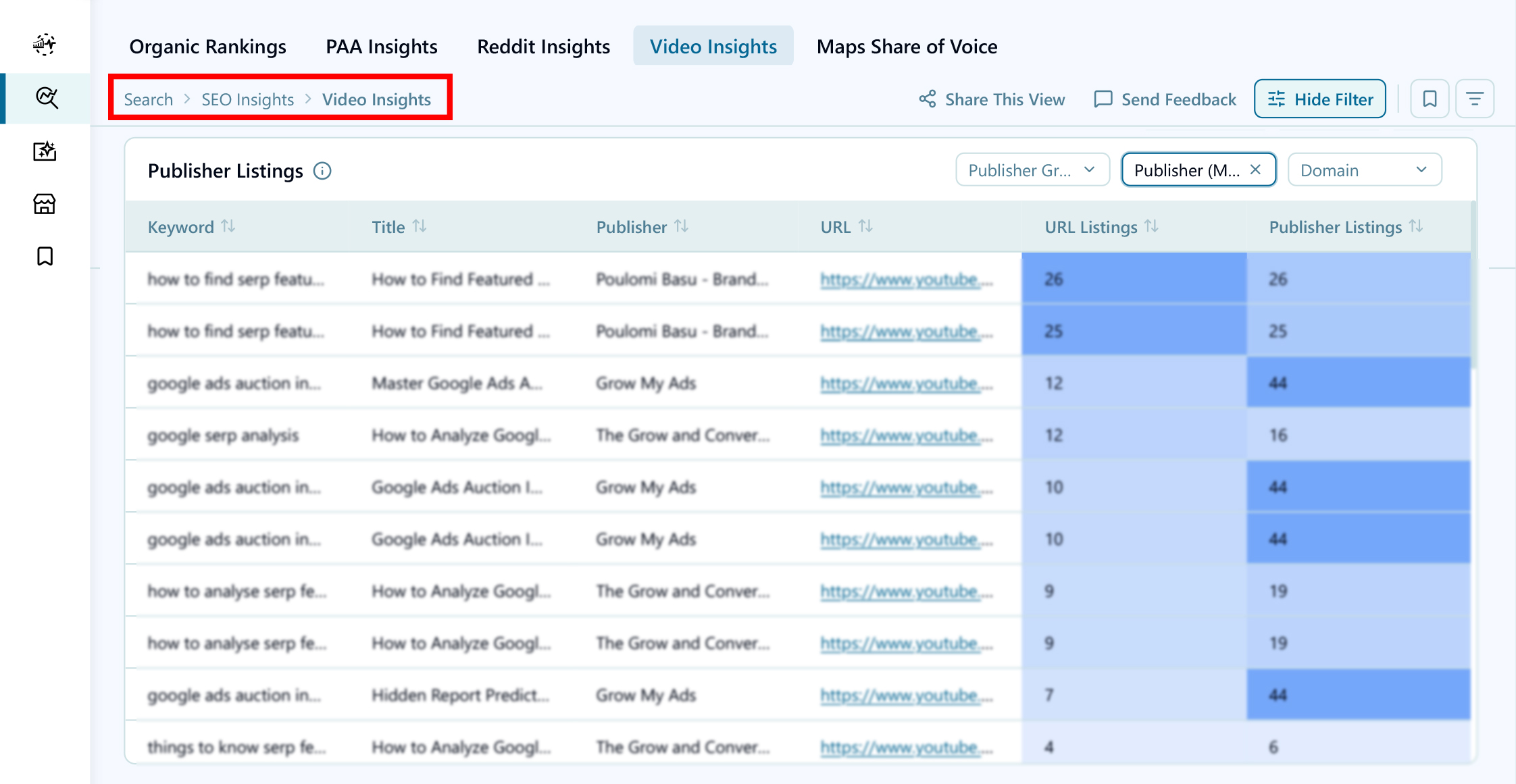
Then SEO Intelligence zooms into the video layer through Video Insights: which keywords trigger video, which publishers and domains own the placements, which titles are winning, and how all of it moves over time. Together they take you from “we need more video” to a specific plan: which cluster to target, who’s winning it now, which angle Google is rewarding, and which gap to close first. GrowByData is the only platform that puts video share of voice beside your organic, Shopping, and AI visibility instead of in a separate tool, which is what makes the prioritizing possible at all.
Frequently asked questions
What does it mean to analyze your SERP?
It means reading everything on the results page for your target keywords, not just your organic rank. That includes AI Overviews, People Also Ask, text ads, video, forums, Shopping, and images, because any of them can win the buyer before your link gets the click.
What is video share of voice?
Video share of voice is the share of video placements your brand owns across a tracked keyword set, compared with competitors, publishers, and creators. It tells you whether you’re present when Google shows video on the searches that matter to your pipeline.
Is video SERP visibility the same as YouTube SEO?
No, and the difference matters. YouTube SEO is about performance inside YouTube. Video SERP visibility is about whether your video wins a placement on the Google results page. You optimize for the query a buyer searches, not for subscribers or watch time.
Does winning the video SERP help with AI Overviews?
Yes, and most teams miss it. On these queries YouTube is one of the most cited sources inside AI Overviews, not only in the video carousel. A video built to win the carousel can also surface in the AI answer, so one asset works two of the most valuable surfaces at once.
How do you find video SERP opportunities?
Start with which of your important keywords trigger video. Then see which publishers and domains own those placements, read the titles to find the angle nobody’s covering, and prioritize the gaps with the strongest buyer intent.
Can one video rank for multiple keywords?
Yes. A well-structured video built around a clear topic cluster can appear across several related searches, which is why one strong video for a group of keywords beats a separate video for each.