

Key Takeaways
- For brands relying on dealer networks, MAP enforcement is foundational to stable margins, predictable channel performance, and fair competition between dealers.
- Inconsistent dealer behavior, temporary price drops, delayed corrections, misaligned promotions is a common source of MAP program breakdown.
- A strong MAP enforcement framework moves through three stages: accurate SKU-level detection, automated staged notification, and verification.
Table of Contents:
In today’s omnichannel retail landscape, brands face unprecedented pressure to maintain pricing consistency across marketplaces, dealer websites, and distributor networks. Minimum Advertised Price (MAP) policies, once straightforward have become significantly harder to enforce as unauthorized sellers, dynamic repricing tools, and fragmented dealer behavior introduce constant price variation.
For manufacturers and brands that rely on dealer networks, MAP enforcement is no longer just a compliance function.
It is the foundation for:
- Stable margins
- Predictable channel performance
- Fair competition between dealers
- Stronger distributor relationships
This use case explains how brands can apply MAP enforcement to improve dealer behavior, reduce disputes, and protect long-term brand value.
Why MAP Enforcement Matters More Than Ever
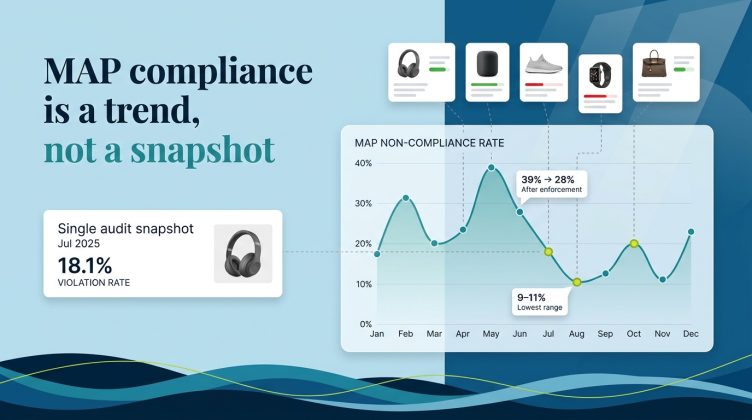
Many brands assume their MAP programs are solid because they can “detect” violations. But monitoring alone is no longer enough.
Without consistent enforcement, MAP violations quickly escalate into:
- Erosion of dealer trust
- Ongoing channel conflict
- Pricing instability across regions
- Customer confusion due to fluctuating prices
- Loss of control over brand presentation
MAP enforcement must be timely, accurate, and rooted in clear evidence, not guesswork. Dealers respond to fairness and clarity, and they disengage when MAP feels inconsistent or reactive.
The Dealer Challenge: Inconsistent Behavior That Disrupts MAP Programs
Even brands with strong MAP policies often see unpredictable dealer behavior, such as:
- Dropping prices temporarily “to stay competitive”
- Delaying corrections after receiving notices
- Running misaligned promotions
- Publishing outdated product content
- Responding slowly during high-traffic events
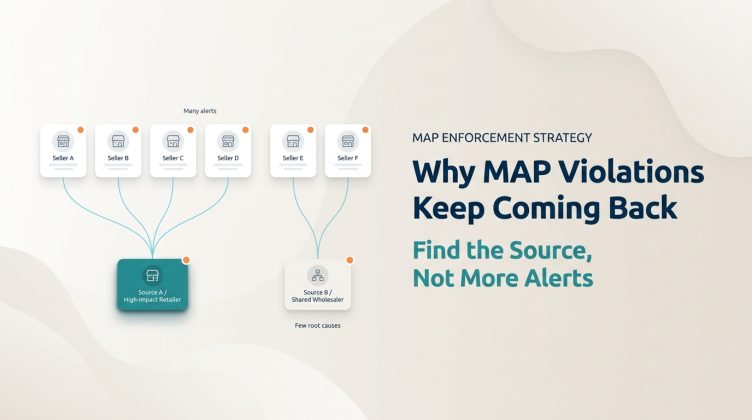
These inconsistencies create ripple effects across the channel. When compliant dealers feel disadvantaged, they escalate concerns to distributors and the brand. Unauthorized sellers often exploit these gaps to undercut prices. Ultimately, inconsistent dealer behavior becomes a MAP enforcement problem, not just a partner management issue.
MAP Enforcement Framework: From Detection to Resolution
A strong MAP program moves beyond collecting violation screenshots. It follows a repeatable workflow:
1. Accurate Detection (SKU-Level + Channel Specific)
MAP violations must be captured with professional-grade accuracy.
Brands need detection that includes:
- Child-SKU matching
- Time-stamped screenshots
- Marketplace and direct seller insights
- Regional and category views
Evidence is the foundation of successful enforcement.
2. Automated, Professional Notification
Violators need clear, consistent messaging that needs to delivered fast. Notification workflows should include:
- Personalized Map violation email templates
- Stage-based escalation (friendly → firm → formal)
- Evidence links
- Defined correction windows
3. Verification & Tracking
After map violation notice is sent, the brand must verify compliance:
- Did the seller correct the price?
- How long did it take?
- Are they repeat offenders?
This builds a compliance history that supports partner reviews.
4. Documentation for Accountability
Audit trails strengthen internal pricing strategy, distributor communication, and legal options to stop map violations when needed.
Using MAP Enforcement to Improve Dealer Performance
MAP enforcement and dealer performance are tightly connected. When enforcement becomes predictable and fact-based, it improves:
- Pricing discipline
- Quote accuracy
- Promotional alignment
- Brand-guideline compliance
- Dealer responsiveness
Brands benefit through reduced channel conflict, more predictable margins, and a consistently improved customer experience.
Managing Dealer Disputes with Clarity and Transparency
Most MAP disputes stem from feed errors, mismatched SKUs, or incorrect promotions, not intentional behavior. The strongest programs resolve these quickly by:
- Validating all evidence
- Reviewing the dealer’s explanation
- Acknowledging honest mistakes
- Documenting repeat patterns
Transparency builds trust and reduces defensiveness.
Adapting MAP Enforcement to Real-World Contexts
MAP enforcement should reflect the context of each situation. Brands often adjust tone and urgency based on:
- Violation severity
- Dealer history
- SKU value
- Seasonal timing
A polite reminder may be enough for first-time errors, while repeated violations require escalation. This balance protects pricing integrity without damaging partner relationships.
→ Minimum Advertised Price Violations: Free Email Template and Best Practices
How GrowByData Strengthens Dealer Networks Through MAP Enforcement
GrowByData’s Best Map Monitoring solution & services helps brands enforce pricing with accuracy, speed, and transparency across all dealer and channel partners.
1. SKU-Level Precision
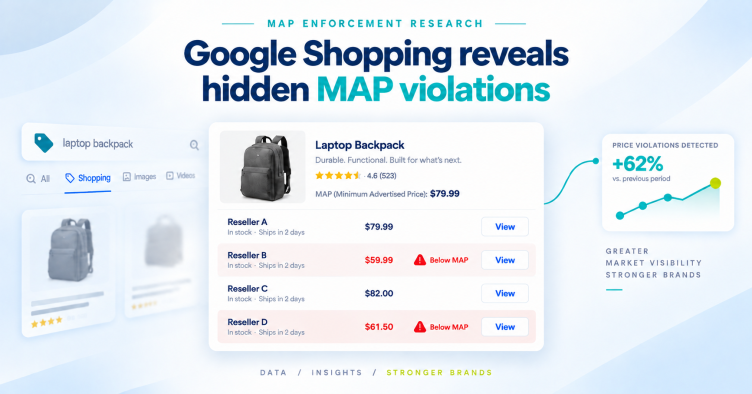
We match at the child-SKU level across Amazon, Walmart, Google Shopping, and individual dealer websites ensuring every violation is validated with precise, screenshot-backed evidence.
2. Multi-Channel, Flexible Scan Cadence
From hourly monitoring for dynamic SKUs to daily scans for stable items, brands can tailor frequency to product sensitivity and promotional cycles.
→ Learn more about MAP Violations on Amazon
3. Automated, Evidence-Based Enforcement
Our workflows support:
- Personalized notices
- Open/read tracking
This transforms enforcement from manual to scalable.
4. Dealer & Category-Level Monitoring
GrowByData helps brands audit high-value dealers, monitor category-specific price pressure, and track unauthorized seller activity with deeper precision.
Conclusion
MAP enforcement is more than catching violations, it is the backbone of a high-performing dealer network. When manufacturers combine accurate monitoring, clear evidence, structured enforcement, and transparent dispute management, they gain the pricing stability, partner trust, and margin protection required to compete in today’s fragmented retail landscape.
GrowByData helps brands achieve this with the precision, expertise, and support required for modern MAP enforcement at scale.
Stay Ahead of MAP Violations. Strengthen Your Dealer Network.
Uncover unauthorized sellers, inconsistent dealers, and pricing violations before they erode your margin.