

AI has fundamentally changed how brands are discovered. Traditional SEO rewarded rankings, but AI engines now reward citation authority such as the sources and domains that Large Language Models trust when generating answers. Whether a brand appears inside ChatGPT, AI Mode, Perplexity, or Google AI Overviews increasingly depends on these citation patterns.
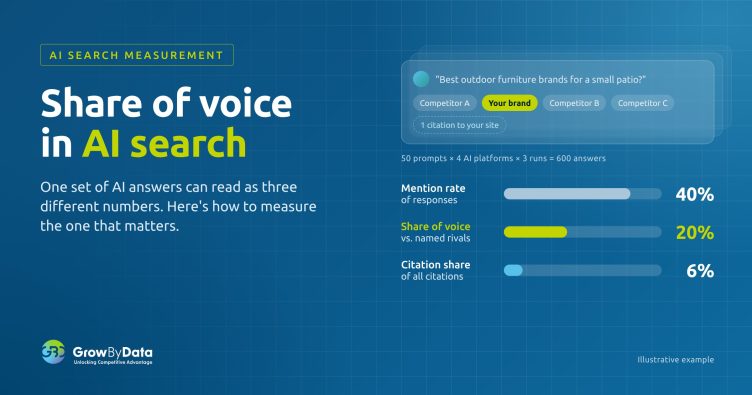
Citation share is one input to AI visibility, the broader measure of how often, how accurately and how favorably AI engines surface a brand.
As discovery shifts, enterprise teams are confronting a new strategic question:
“Which sources actually shape how AI understands and represents our brand?”
This question sits at the center of modern citation tracking and is now one of the most critical levers in LLM visibility.
What Is Citation Tracking in the AI Era?
Citation tracking monitors where a brand is referenced, how often it is mentioned, which domains influence its AI representation, and what sentiment accompanies those mentions.
But unlike traditional backlink or PR workflows, AI citation tracking examines the inputs that influence how LLMs generate their answers.
When models like ChatGPT or Perplexity synthesize responses, they draw heavily from authoritative domains like Wikipedia, Reddit, review publishers, comparison sites, and structured product pages. This dynamic is central to how brands appear in conversational answers, which is why teams increasingly adopt LLM-focused visibility frameworks to understand where influence originates. To see which of those sources ChatGPT cites for your own prompts, follow our ChatGPT citation analysis method.
Brands with strong citation authority appear consistently.
Brands without it disappear even when SEO rankings look strong.
Why Citation Authority Now Determines AI Visibility
AI engines do not treat all content equally. They elevate information from sources they perceive as reliable, consistent, authoritative, and easy to interpret.
This shift means:
- A top SEO ranking no longer guarantees AI visibility.
- Strong product pages are ignored if third-party sources overshadow them.
- Competitors with robust PR ecosystems or active communities dominate AI summaries.
As explored in the new era of search visibility, the mechanics of AI discovery differ sharply from traditional ranking systems.
Backlinks helped brands rank. Citations determine whether AI talks about a brand at all.
A brand may sit comfortably in the top three organic results and still be entirely absent from ChatGPT or Google AIOsummaries due to weak citation authority.
How Citation Authority Shapes AI-Generated Answers
LLMs lean on citation ecosystems to determine:
- Which brands are included in category or product summaries.
- How the brand is described across tone, attributes, and sentiment.
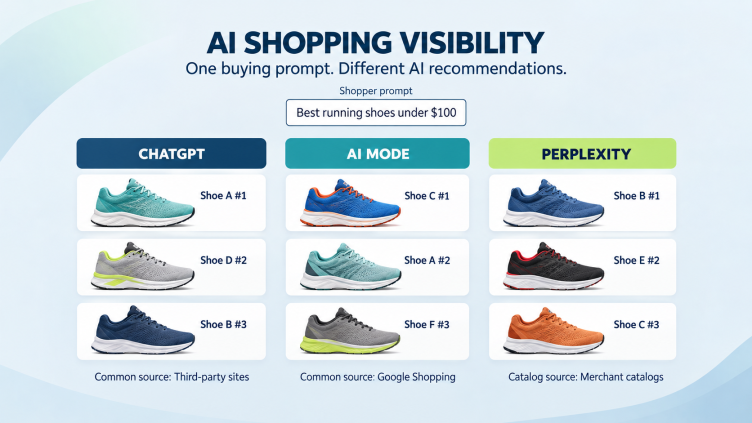
- Which competitors appear alongside it in recommendation clusters.
- How confidently AI recommends the brand based on volume and consistency of citations.
This is why sectors analyzed in our LLM intelligence transformation research show large gaps between SEO leaders and AI visibility leaders.
Citation Drift: The New Visibility Threat
One of the most underestimated risks in AI visibility is citation drift when the domains LLMs rely on change over time. This creates fluctuations in:
- AI inclusion frequency
- Brand tone and sentiment
- Recommendation strength
- Competitive positioning inside summaries
As detailed in our analysis of shifting AI citations, even small changes in source influence can produce large visibility swings.
Monitoring citation in LLM is no longer optional, it’s foundational.
Why Traditional Visibility Tools Cannot Measure This
SEO and analytics tools track:
- Backlinks
- Keyword rankings
- Clicks and impressions
- On-site SEO health
None reveal:
- Which domains LLMs rely on
- Why certain competitors dominate AI answers
- How citation ecosystems shape sentiment and narrative
- Where visibility gaps originate inside AI systems
This is the gap that ChatGPT monitoring, Perplexity visibility tracking, and Google AI Mode analytics are designed to solve.
GrowByData’s Approach: Measuring the Source Behind AI Visibility
GrowByData’s LLM Intelligence platform uncovers:
- Citation Domain Composition: which sources influence AI responses across engines.
- Citation Frequency: how often brands are referenced within LLM answers.
- Sentiment Mapping: how AI describes brands across categories.
- Visibility Correlation: how citation strength relates to prompt-level inclusion.
- Competitive Benchmarking: which brands dominate citations and why.
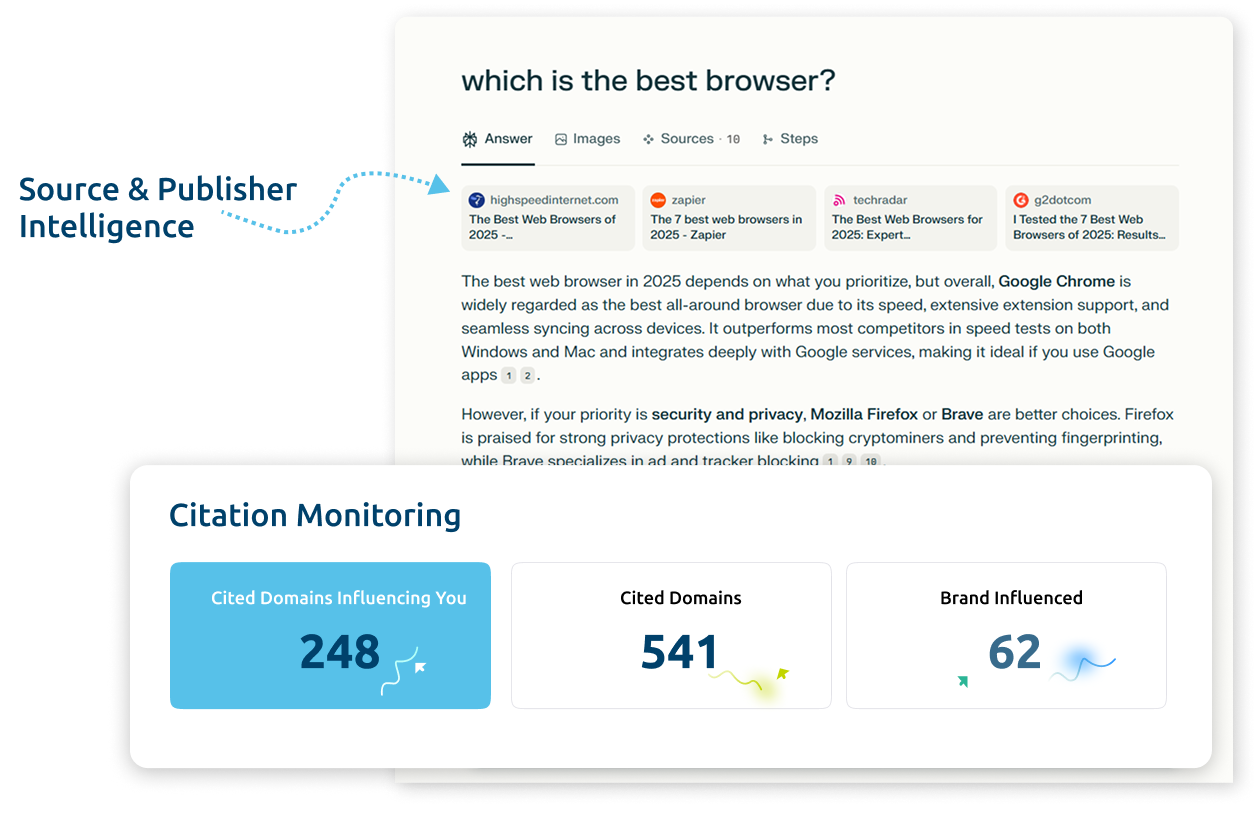
This approach builds on the principles explored in operationalizing LLM visibility, where deeper search signals reveal actionable competitive advantages.
By using logged-in, human-validated, multi-platform extraction, GrowByData provides the only enterprise-grade citation dataset built for AI visibility.
Why Citation Tracking Matters Across All Industries
Patterns differ by sector, but the outcome is universal:
- Manufacturing: distributor citations overpower brand mentions, weakening visibility.
- Retail: Reddit, review publishers, and buyer guides dominate AI answers.
- FinServ: compliance sites and aggregators outrank brand sources in AI summaries.
- Education: degree comparison platforms override university websites.
These visibility gaps surface clearly in industrial AI visibility studies and other category analyses.
How Brands Can Strengthen Citation Authority
Enterprise teams should prioritize:
- Enhancing structured content to improve machine readability.
- Expanding authoritative third-party presence across trusted sources.
- Monitoring citation ecosystems monthly for drift and competitive shifts.
- Identifying category citation gaps using AI visibility scoring.
- Tracking sentiment patterns using AI search visibility frameworks.
This is not traditional SEO, it is AI-era discoverability strategy.
Conclusion: Citations Are the New Visibility Engine
Search no longer begins on a list of links. It begins inside conversational AI answers.
Brands that measure only rankings miss the deeper truth:
Visibility now depends on who cites you, how often, and with what authority.
GrowByData’s LLM Visibility Tracker helps enterprises:
- See what AI systems see
- Understand which sources shape their brand narrative
- Track citation authority over time
- Diagnose visibility gaps across engines
- Strengthen presence across AI and search ecosystems
In the age of AI, citation authority is the foundation of discoverability.
The brands that master it will define the next decade of competitive visibility.