Key Takeaways
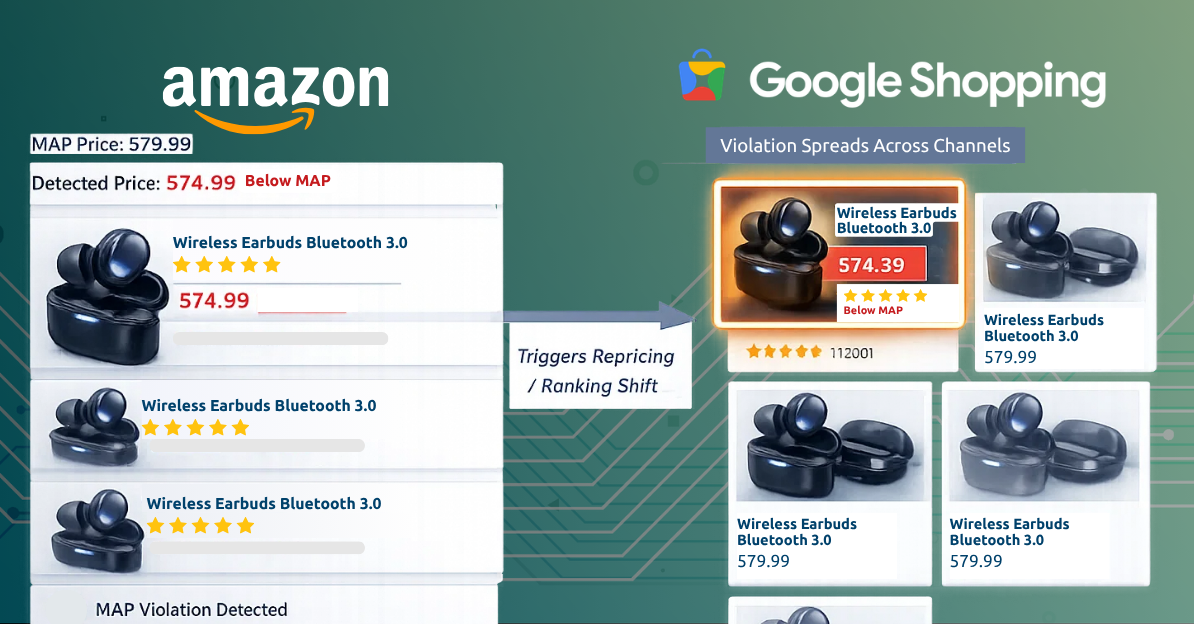
- MAP violations cascade: once one reseller drops price, automated repricing tools can spread that price across dozens of listings within hours.
- Manual or occasional-audit monitoring is no longer enough to catch violations before they spread across Amazon, Google Shopping, and other channels.
- MAP violations increasingly affect visibility in AI-driven search and commerce platforms, not just marketplace listings.
Table of Contents:
- MAP Violations Are Quietly Eroding Your Brand
- The Hidden Mechanics Behind MAP Violations
- Why Manual MAP Monitoring Breaks at Scale
- MAP Monitoring Is Also a Pricing Intelligence Opportunity
- Why Pricing Intelligence Matters in AI-Driven Search
- How Modern Brands Monitor MAP Violations
- Key Takeaways
- Frequently Asked Questions
How ecommerce brands monitor reseller pricing, detect MAP violations, and protect visibility across Amazon, Google Shopping, and AI-driven search platforms.
MAP violations occur when resellers advertise products below a brand’s minimum advertised price policy. These violations often spread across marketplaces such as Amazon and Google Shopping because automated repricing systems respond to lower prices. Modern brands use automated MAP monitoring and enforcement tools to detect violations at the SKU level, capture evidence, identify unauthorized resellers, and protect product visibility in search results and AI-driven commerce platforms.
MAP Violations Are Quietly Eroding Your Brand
For many ecommerce brands, pricing control feels like a constant game of whack-a-mole.
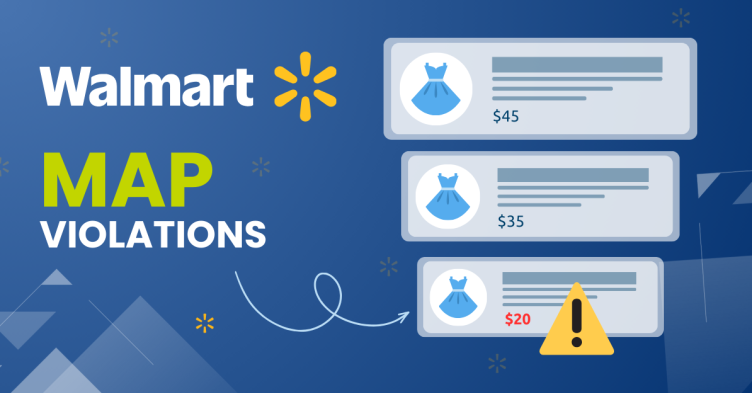
A reseller lists a product below MAP.
- Another reseller follows.
- Automated repricing tools respond.
- Suddenly, dozens of listings across marketplaces reflect the new lower price.
What started as a single pricing violation can quickly cascade across the market.
This is not only a pricing problem.
It becomes a visibility problem, a ranking problem, and a margin problem across digital commerce platforms.
Today’s brands must monitor pricing across:
-
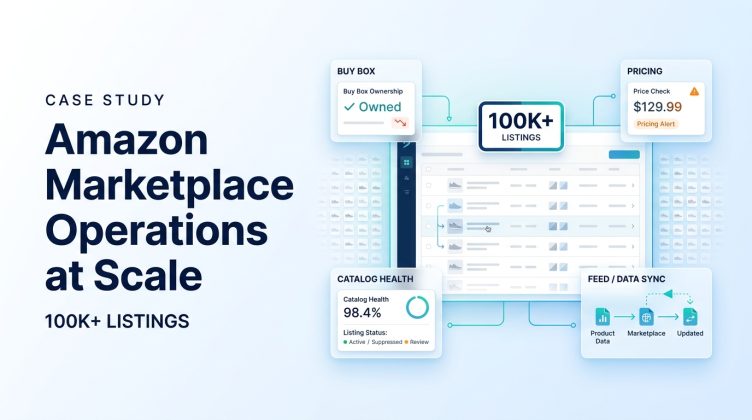
- Amazon — see our deep dive on MAP violations on Amazon
- Google Shopping
- eCommerce reseller websites
- Marketplace listings
Yet many organizations still rely on manual monitoring or occasional audits.
That approach is no longer sufficient.
Minimum Advertised Price (MAP) policies exist to protect brand value and maintain fair competition between retailers.
However, enforcement becomes difficult when violations trigger automated marketplace responses.
When one reseller drops the price, several things can happen immediately:
- Marketplace repricing bots react
- Other resellers attempt to match or beat the price
- Product listings gain ranking advantages due to a lower price
- Search visibility shifts across shopping platforms
In many cases, the original violation was small.
But the ripple effect can impact dozens of listings across marketplaces.
This is why MAP enforcement has become increasingly complex in modern ecommerce environments.
Where Brands Lose Visibility
Pricing is deeply connected to how products appear in search results.
Lower prices influence:
- Google Shopping rankings
- Marketplace buy box placement
- Product sorting filters
- Marketplace recommendation systems
Even small price differences can affect visibility.
For example:
- $49.99 vs $49.95
- $79.99 vs $79.90
These minor differences can influence ranking algorithms that prioritize lower-priced listings. Over time, this can shift visibility away from compliant retailers and toward violating sellers.
Why Manual MAP Monitoring Breaks at Scale
Many brands still enforce MAP policies using manual workflows:
- Search Google or marketplaces manually
- Capture screenshots of violations
- Email distributors
- Wait for corrections
This process becomes impossible as catalogs grow.
Consider a typical manufacturer:
- 200 product styles
- Thousands of SKUs
- Hundreds of resellers
Some product categories include hundreds of SKU variations due to color and size combinations.
A single product style can represent more than 100 individual SKUs.
Without automated monitoring, violations across these variations often go unnoticed.
What Brands Discover When They Start Monitoring
When brands begin monitoring MAP compliance systematically, several patterns often emerge.
A small number of resellers create most violations
In many cases, a handful of sellers account for the majority of violations.
These sellers may:
- Operate drop shipping websites
- Purchase through distributors
- Run automated repricing tools
Identifying these repeat offenders early makes enforcement significantly easier.
Promotions create temporary spikes
MAP violations frequently appear during promotional periods such as:
- Holiday sales
- Clearance events
- New price list releases
These promotions can trigger temporary violations that persist longer than intended.
Monitoring helps brands identify and resolve these spikes quickly.
Product complexity increases violation risk
Products with many variations often generate more pricing violations.
For example, apparel or tactical gear may include:
- Multiple colors
- Multiple sizes
- Multiple variations
Each variation represents an additional SKU that must comply with MAP policies.
This increases the probability of pricing inconsistencies across reseller networks.
MAP Monitoring Is Also a Pricing Intelligence Opportunity
Many organizations think of MAP monitoring only as an enforcement mechanism.
But pricing data can also reveal strategic insights.
Brands often discover:
1. Margin opportunities
- Some resellers list products at higher prices than expected.
- This can indicate opportunities to increase pricing without damaging demand.
2. Competitive pricing signals
Monitoring competitor products over time reveals trends such as:
- When competitors increase prices
- How frequently they run promotions
- Whether discounts are temporary or consistent
These signals help brands make more informed pricing decisions.
3. Inventory strategy insights
Pricing intelligence can also support inventory decisions by identifying:
- Products suitable for clearance
- Items where lower prices drive higher volume
- Categories where price increases are possible
MAP monitoring, therefore, becomes a broader pricing intelligence capability.
Why Pricing Intelligence Matters in AI-Driven Search
Product discovery is rapidly evolving.
AI-driven search systems are increasingly shaping how consumers discover products.
These systems synthesize product information from multiple sources including marketplaces and ecommerce sites.
Pricing consistency becomes an important signal.
If pricing appears inconsistent across retailers, AI systems may:
- Prioritize alternative products
- Reduce trust signals for the brand
- Highlight competitors with clearer pricing signals
This means pricing intelligence now influences digital visibility in both traditional search and AI-generated results.
How Modern Brands Monitor MAP Violations
Leading ecommerce organizations are adopting automated monitoring systems that:
-
- Track pricing across marketplaces daily
- Identify MAP violations automatically at the SKU level
- Detect new resellers entering the market
- Alert teams through dashboards and email reports
- Monitor trends across product catalogs
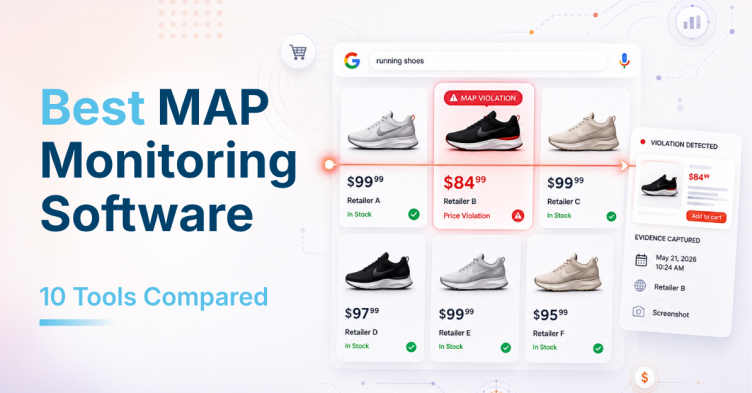
Coverage differs a lot between vendors, especially on whether they actually catch violations in Shopping listings and sponsored placements instead of just product pages. We stacked ten platforms against each other on exactly that in our MAP monitoring software comparison.
Some solutions also assist with reseller communication by generating violation alerts with timestamped screenshot evidence attached, the same evidence brands use to enforce MAP policies at scale.
This reduces manual work while accelerating enforcement.
The Strategic Shift
Pricing control used to be a reactive task.
Today, it has become a strategic capability tied to digital visibility.
Brands that monitor pricing effectively gain advantages in:
- Search visibility
- Marketplace ranking
- Competitive pricing strategy
- Reseller network management
Most importantly, they identify problems early.
Because in ecommerce markets, by the time revenue declines, the signal often appeared weeks earlier in the form of a pricing anomaly.
Key Takeaways
- MAP violations often trigger cascading price changes across marketplaces
- Even small price differences influence marketplace ranking algorithms
- Manual MAP monitoring becomes impractical at large SKU volumes
- Pricing intelligence reveals margin and competitive opportunities
- Consistent pricing signals are increasingly important in AI-driven search environments
Frequently Asked Questions
What is a MAP violation?
A MAP violation occurs when a reseller advertises a product below the minimum advertised price set by the brand. MAP policies help maintain consistent pricing and protect brand value across retailer networks.
Where do MAP violations typically occur?
MAP violations most commonly appear on digital marketplaces and shopping platforms, including:
- Amazon
- Google Shopping
- reseller ecommerce sites
- marketplace aggregators
These platforms allow many sellers to advertise the same product simultaneously.
Why do MAP violations spread quickly?
Many sellers use automated repricing systems. When one seller drops price, other sellers and marketplace systems may automatically adjust pricing, creating a cascading effect.
How do brands detect MAP violations?
Brands use price monitoring tools that scan marketplaces and reseller websites at the SKU level. These systems detect pricing below MAP and alert brands so they can take corrective action.
Why does MAP monitoring matter for search visibility?
Lower prices often influence product rankings on marketplaces and shopping platforms. Sellers offering lower prices may appear higher in search results, reducing visibility for compliant retailers.